
Reviewed · KEMERI NATIONAL PARK & JURMALA TRIPS
Great Ķemeri Bog and Swamp Forest Hiking Adventure
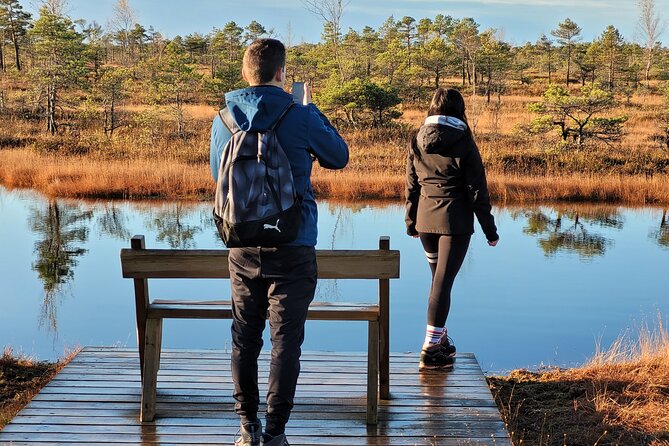
Leave Riga’s streets behind. This six-hour outing pairs two very different habitats in Ķemeri National Park: the open, mossy expanse of Great Ķemeri Bog and the wet black alder woods around Sloka Lake. I like the contrast between the two walks, and I like that transport, guiding, and photos are included. The main thing to consider is weather, since the tour needs suitable conditions and the swamp forest is most flooded in only certain months.
The small group, limited to eight people, should suit you if you prefer questions and conversation over a big coach excursion. Guide Rolands is praised for his warm manner, nature expertise, and ability to adjust the walking pace. Bring food and drink, though, because neither is included in the $156.21 price.
In This Review
- Key points to know before booking
- Why these two walks belong together
- Great Ķemeri Bog: two hours on the wooden boardwalk
- Sloka Lake: five kilometers through wet woodland
- A guide who connects nature with Latvia
- What the $156.21 price really covers
- Pickup from Riga or Jūrmala
- Which season should you choose?
- Who will enjoy this tour most?
- Should you book the Great Ķemeri Bog hike?
- FAQ
- Where does the tour start?
- What time does the tour begin?
- How long is the tour?
- How long is the drive from Riga?
- How long is the drive from Jūrmala?
- How far do you walk?
- Is food included?
- How many people can join the tour?
- Is the tour offered in English?
- What happens if the weather is poor?
- Can you cancel for a refund?
Key points to know before booking
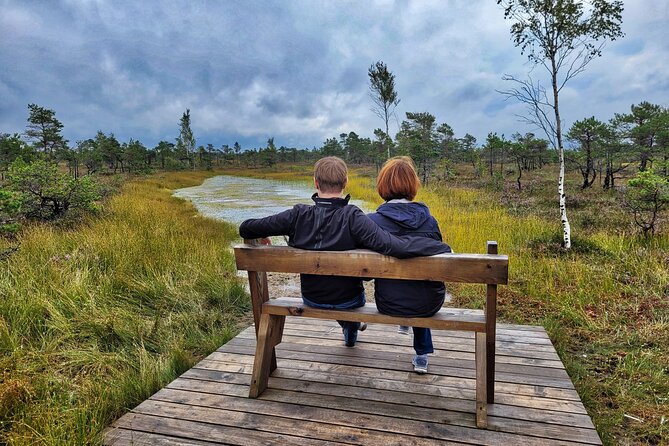
- Two ecosystems in one morning: Walk across a raised bog, then follow boardwalks through a wet black alder forest.
- The best floodwater appears seasonally: April, May, late September, and October offer the most dramatic swamp views.
- A small group keeps the outing personal: The maximum is eight people, with pickup from Riga or Jūrmala.
- The walks total 9 kilometers: Expect about 4 kilometers at Great Ķemeri Bog and 5 kilometers at Sloka Lake.
- Rolands adds more than directions: His talks cover Latvian nature, culture, traditions, trees, and ecosystems.
- Winter can be beautiful too: Snow, mist, and low sun can give the bog a quiet winter character.
Why these two walks belong together
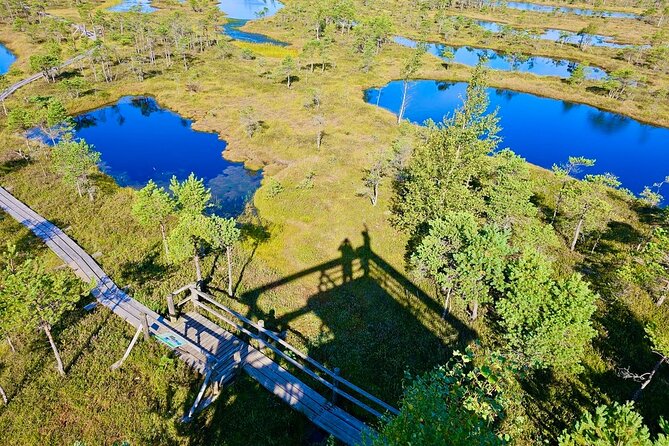
Great Ķemeri Bog and Sloka Lake show two sides of Latvia’s wet country. The bog is open and spacious, with low plants, pools, moss, and a broad sky. Sloka Lake feels enclosed, with waterlogged woodland, boardwalk sections, and trees growing in saturated ground.
I like this pairing because it gives the day a clear rhythm. First you get wide views and a feeling of open space. Then the route turns into a more intimate walk through forest and wetland. You are not simply looking at one natural area from a parking spot. You get time on foot in both settings.
The tour takes place in Ķemeri National Park, and Great Ķemeri Bog covers more than 6,000 hectares. It is a raised bog habitat of European importance, so the setting has value beyond its good photo opportunities. Your guide can help explain why the ground is wet, why the plant life is unusual, and how the bog differs from the swamp forest.
This is also a useful choice if you have limited time in Latvia. You can visit the park without arranging a rental car, reading trail maps, or working out the route from Riga. The drive takes about 45 minutes each way from Riga, or about 15 minutes each way from Jūrmala.
More Kemeri National Park and Jurmala trips:
- From Riga: Best of Kemeri National Park In One Day
★ 5.0 · 61 reviews - Sunset at Kemeri National Park
★ 5.0 · 38 reviews - Sunrise at Kemeri National park + Jurmala
★ 5.0 · 37 reviews
Great Ķemeri Bog: two hours on the wooden boardwalk
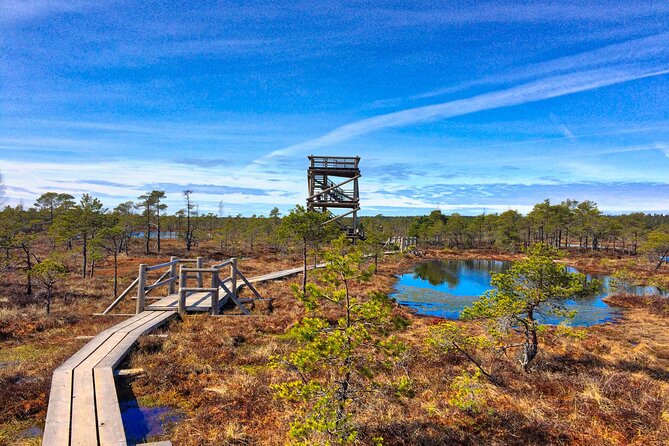
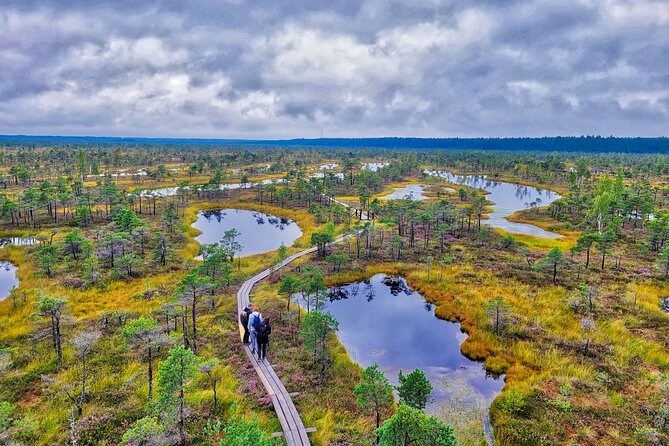
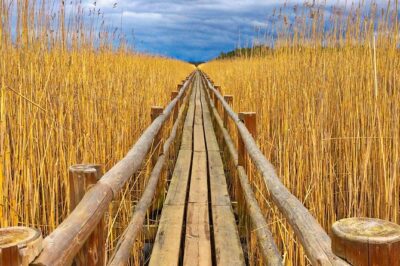
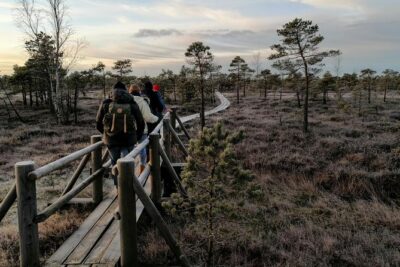
The first major walk covers about 4 kilometers and lasts around two hours. A sturdy wooden boardwalk carries you through the raised bog, keeping your feet above the wet ground and protecting the fragile habitat.
The boardwalk is important here. A bog can look simple from a distance, but the raised surface, pools, moss, and low vegetation create a setting that changes with the light and season. You can look across a broad, mostly open area rather than through dense trees. That makes this section particularly good for wide photographs.
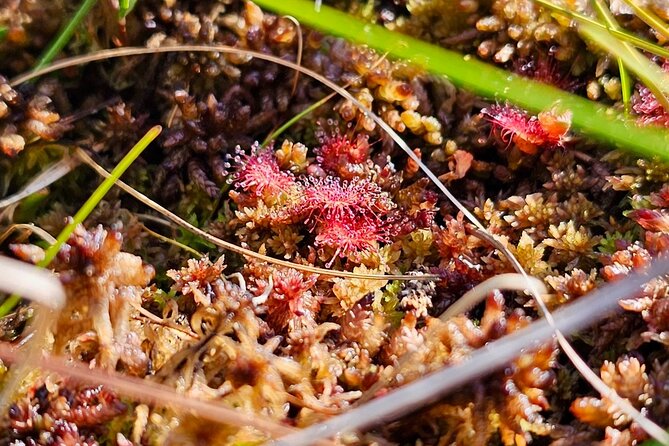
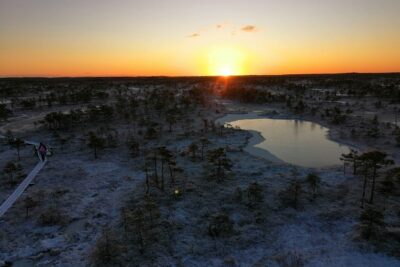
The colors shift through the year. Spring brings new growth and flowers. Summer gives the bog a greener appearance. Autumn adds gold and other warm tones. Winter can be spare and still, with snow turning the open ground into something close to a quiet white plain.
One of the strongest details from the experience is the range of weather conditions that can work here. A New Year’s Eve visit with snow and sunshine was described as a winter wonderland, while a September walk offered strong color in the moss, plants, and trees. Mist can also change the mood, making the boardwalk feel more remote.
Your guide is a major part of this stop. Rolands has a background in nature conservation and can explain trees, ecosystems, and the importance of the park. His style is reported as friendly and patient, with the pace adjusted to the group. That matters on a nature walk, since the best parts are often the small details you would otherwise pass without noticing.
Do not expect a strenuous mountain hike. The route is a boardwalk walk, but it still takes about two hours and covers 4 kilometers. Comfortable walking shoes are sensible, and you should be ready for changing outdoor conditions. The tour information does not promise a specific level of boardwalk accessibility, so anyone with mobility concerns should ask the operator before booking.
Sloka Lake: five kilometers through wet woodland
The second walk takes about two hours and covers roughly 5 kilometers on the Sloka Lake nature trail. The setting changes quickly from open bog to black alder swamp forest, a wet woodland shaped by standing and flooded water.
This is the more enclosed and atmospheric section. The trail crosses wet areas on boardwalks and runs beside Sloka Lake. In high-water periods, the forest can look partly submerged, with water around the tree bases and reflective channels between the trunks. A viewing platform provides a place to look for birds and take photographs.
Timing matters more here than at the bog. The swamp forest is at its most flooded in April and May, and again in late September and October. During other parts of the April to October season, it may not be fully flooded, but the woods remain green and attractive.
That seasonal note should guide your expectations. If you want the most dramatic flooded-forest photographs, aim for spring or late autumn. If your dates fall elsewhere, you still get the wet forest, the lake, and the boardwalk, but the water level may not create the same striking effect.
The forest can also have a sulfur smell. That is not a flaw in the tour. It is part of the wetland setting, and it gives the place a more physical character than a polished city park. I would treat it as one of the memorable details, especially if you enjoy natural places that do not feel landscaped for visitors.
The Sloka Lake route is longer than the bog walk, but both are described as hikes rather than technical treks. The supplied information says most people can participate. Still, nine kilometers of walking over two stops is worth considering if you are not used to spending several hours outdoors.
A guide who connects nature with Latvia
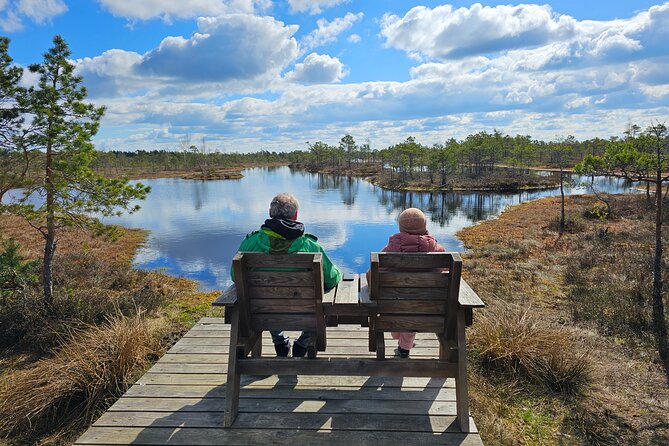
The experience is designed around a local eco-guide, not simply a driver who points out the entrance. On the way, you can learn about Latvian nature, culture, and traditions. At the park, the focus shifts to habitats, trees, water, and the role of Ķemeri National Park.
Rolands receives especially strong praise for his explanations and friendly personality. He is described as patient with questions and able to explain the ecology in a clear way. That makes a real difference here. Without context, a bog can look like a stretch of moss and water. With a good guide, you begin to understand why the habitat matters and how it differs from a swamp forest.
The small-group limit of eight supports that style. You can ask about a tree, pause for a photograph, or request a slower pace without holding up a large crowd. The operator also advertises an improvised approach for groups of two or more, which suggests some flexibility in how the day unfolds. I would still treat the main two walks and approximate timing as fixed, but the experience should not feel rigid.
Photos are included. That is useful if you are traveling alone or would like a few pictures of the walk without handing your phone to strangers. It is an extra touch, although you should not book the tour solely for photography. The quality and number of photos are not specified.
More hikes:
- Hike In Gauja National Park – Up And Down The Switzerland Of Latvia
★ 5.0 · 23 reviews - Hiking in Gauja National Park
★ 5.0 · 14 reviews - Full Day Gauja National Park Ultimate Hiking & Sightseeing Trip
★ 5.0 · 4 reviews - Hiking Adventure in Gauja National Park – 7 Days
★ 5.0 · 3 reviews
What the $156.21 price really covers
At $156.21 per person, this is not a budget nature outing. The value depends on how much planning and transport you want someone else to handle.
The price includes hotel pickup and drop-off in Riga or Jūrmala, round-trip transport, the six-hour guided experience, admission tickets, an eco-guide, and photos. From Riga, the transfer takes about 45 minutes each way. That means you avoid arranging a separate trip to Ķemeri National Park and can use the drive to learn about Latvia from the guide.
For a small group of no more than eight, that package is easier to justify than the same price on a crowded bus. You are paying for access to two separate areas, a full day of transport and walking, and a guide who adds environmental context. If you are already renting a car and are comfortable finding the trails yourself, the price may feel high. If you want a simple outing from Riga without driving, it offers more practical value.
Food and drinks are not included. Pack water and something to eat, since the tour lasts about six hours and involves two walks. Tips and insurance are also extra. The tour information recommends insurance that covers outdoor adventure activities, which is sensible for any day involving wet ground, boardwalks, and transfers.
Pickup from Riga or Jūrmala
The stated start time is 8:00 a.m., but pickup may fall between 8:00 and 8:30 depending on the locations and number of people. You will be collected from your hotel or another agreed location in Riga city or Jūrmala.
From Jūrmala, the drive to the park is much shorter, about 15 minutes each way. From Riga, allow about 45 minutes each way. The six-hour total includes these transfers, so the actual time walking and exploring is about four hours, split between the bog and Sloka Lake.
That is a useful distinction when planning your day. This is not six full hours on the trails. It is a half-day nature trip with transport included, and you should have time afterward for other plans in Riga or Jūrmala.
The group size is capped at eight, but the experience also needs a minimum number of participants. If that minimum is not reached, the operator offers another date, another experience, or a full refund. Poor weather can also lead to a date change or refund.
Free cancellation is available up to 24 hours before the start time. Changes or cancellations inside that window are not accepted for a refund, so keep the local cutoff time in mind.
Which season should you choose?
Each season gives Great Ķemeri Bog a different character. Winter can bring snow, sunshine, mist, and a quiet sense of space. The New Year’s Eve example shows that cold weather does not automatically make this a poor choice.
Spring is especially appealing if Sloka Lake is your main goal. April and May are the best months for high water in the swamp forest, and the flooded trees can create the most striking views. Spring also brings new plant growth around the bog.
Summer offers greener conditions and comfortable access during the main April to October season. The forest may be less flooded, but the setting remains lush and calm. Autumn is another strong option, particularly in late September and October when water levels can rise and the colors change.
I would choose based on your priority. Pick spring or late autumn for wetland drama and floodwater. Pick winter for snow and stillness. Pick summer for green foliage and a straightforward nature walk.
Who will enjoy this tour most?
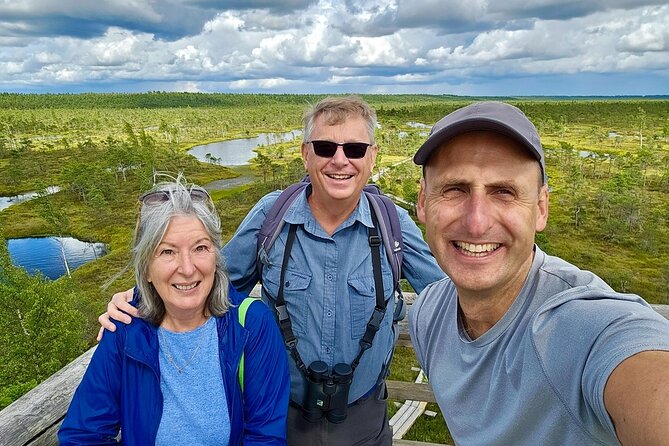
I would recommend this outing to anyone who wants a strong contrast to Riga’s urban center. It suits people who enjoy walking, nature photography, birdwatching, and learning how wetland habitats work.
It is also a good fit for couples, small friend groups, and solo visitors who want a guide and included transport. The small group makes it easier to ask questions and keep the pace comfortable.
You may want to think twice if you want a fast sightseeing tour with almost no walking. The day includes about 9 kilometers on foot, and the terrain is defined by bog and swamp conditions. It may also disappoint you if you expect the swamp forest to be fully flooded outside the high-water months.
Should you book the Great Ķemeri Bog hike?
Book it if you want to see a side of Latvia that you cannot get from the streets of Riga. The two habitats are genuinely different, the guide adds useful local meaning, and pickup removes the hassle of reaching the park.
I especially like this tour for repeat visits at different times of year. Snow, autumn color, spring floodwater, and summer greenery can make the same trails feel quite different. Just bring food, prepare for several hours of walking, and choose your dates carefully if flooded forest is your main reason for going.
FAQ
Where does the tour start?
Pickup is offered from your hotel or another location in Riga city or Jūrmala.
What time does the tour begin?
The stated start time is 8:00 a.m. Pickup may take place between 8:00 and 8:30 a.m., depending on the group and pickup locations.
How long is the tour?
The total duration is approximately six hours, including transportation from Riga or Jūrmala.
How long is the drive from Riga?
The transfer takes about 45 minutes each way from Riga.
How long is the drive from Jūrmala?
The transfer takes about 15 minutes each way from Jūrmala.
How far do you walk?
The Great Ķemeri Bog walk is about 4 kilometers, and the Sloka Lake trail is about 5 kilometers.
Is food included?
No. Food and drinks are not included, so you should bring your own provisions.
How many people can join the tour?
The tour has a maximum of eight participants.
Is the tour offered in English?
Yes. The tour is offered in English.
What happens if the weather is poor?
If the tour is canceled because of poor weather, you will be offered another date or a full refund.
Can you cancel for a refund?
Yes. You can cancel at least 24 hours before the start time for a full refund. Cancellations or changes made less than 24 hours before the tour are not accepted for a refund.
Recently added around Riga
- Tour from Riga to Vilnius: Bauska Castle, Rundale Palace and The Hill of Crosses★ 5.0 · 3 reviews
- Group Tour: Sigulda and Turaida from Riga.★ 4.5 · 3 reviews
- Fun Walk Private Tour Around Central Market Riga★ 4.5 · 3 reviews
- Hiking Adventure in Gauja National Park – 7 Days★ 5.0 · 3 reviews
- Latvia’s Switzerland and Gauja National Park Tour★ 5.0 · 3 reviews
- Jurmala sunset tour★ 4.5 · 3 reviews
- Riga Medieval Dinner★ 4.0 · 4 reviews
- Private Snowmobile or ATV Safari with Riga Black Balsam Tasting★ 5.0 · 4 reviews
Kemeri National Park & Jurmala Trips, compared.
Best of Latvia, Jurmala, Kemeri N Park, Kuldiga City, Food & More
Read our review →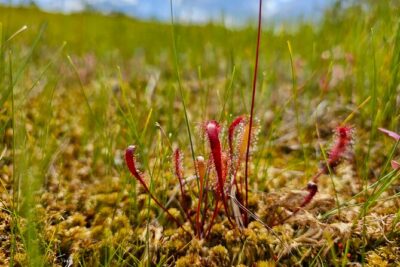
Ķemeri Great Bog Discovery With Optional Sunrise & Jūrmala Visit
Read our review →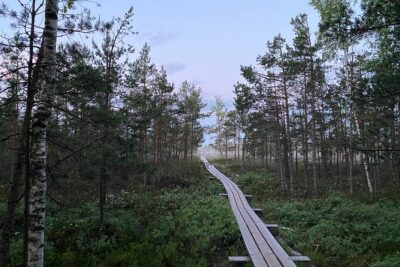
Private Full-Day Trip to Jurmala and Great Kemeri Bog Boardwalk
Read our review →Browse the lists this tour appears in