
Reviewed · LATVIAN FOOD & MARKET TOURS
Riga Central Market
Come hungry, leave curious about Latvia. This two-hour Riga Central Market experience gives you a useful introduction to Latvian food through five market pavilions, samples, and stories about preserving food through long winters. I like the chance to try foods you may not order on your own, including hemp butter, sprats, fried lampreys, rye bread, and local beer. I also like that the tour reaches beyond eating, with time for the outdoor stalls and the nearby Spikeri warehouse district. The main drawback is the price: at $77.89 per person, it is a serious cost for a two-hour outing, especially if you are happy to browse and snack independently.
The strongest part is the guide’s explanation of how food fits Latvian life. Dace and Edgar are both praised for making the samples meaningful, covering holiday customs, winter storage, and everyday cooking. You should come with a healthy appetite, though the modern Gastro Market section may feel less distinctly Latvian than the traditional pavilions.
In This Review
- Key points to know before you book
- Why Riga Central Market is worth your time
- Beginning among the five food pavilions
- Local flavors worth trying
- What the guide adds to the food
- The outdoor stalls and bargain hunting
- A short walk to the Spikeri warehouses
- The modern Central Gastro Market
- Is $77.89 a fair price?
- Timing, meeting point, and practical advice
- Who should book this market experience?
- Should you book Riga Central Market?
- FAQ
- Where does the Riga Central Market tour start?
- How long does the experience last?
- What food can I taste?
- Is the food included in the ticket?
- Is this a private tour?
- When can I cancel for a full refund?
Key points to know before you book
- Five food pavilions: Meat, vegetables, dairy, fish, and gastronomy stalls each offer a different look at Latvian eating.
- Samples are included: You can taste local specialties such as sprats, hemp butter, smoked meats, cheese, pastries, vegetables, desserts, and drinks.
- Latvian food traditions take center stage: The tour connects preserved foods, holiday dishes, and winter preparation to local culture.
- The outdoor market adds shopping: Look for fruits, vegetables, plants, flowers, souvenirs, knitwear, amber jewelry, and other goods.
- Spikeri is close by: Thirteen historic warehouses survive in the nearby district, making a useful add-on to the market visit.
- It is a private activity: Only your own group participates, with group discounts available and English offered.
Why Riga Central Market is worth your time
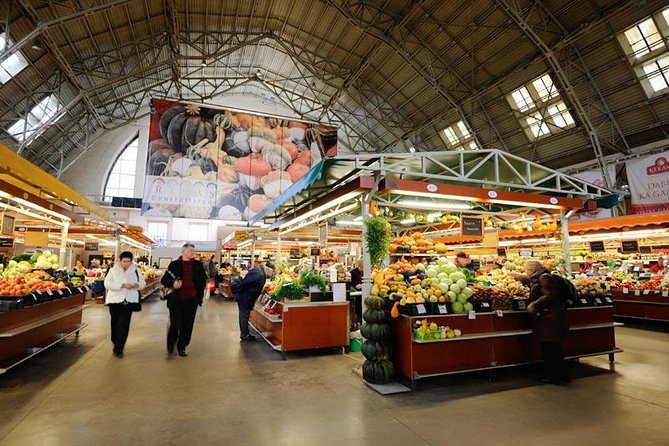
Riga Central Market is not just a place to buy lunch. It is a working food market where Latvian staples sit beside imported produce, quick snacks, household goods, and modern restaurants. A guide helps you understand what you are seeing instead of leaving you to guess at unfamiliar labels and ingredients.
I especially like the focus on foods shaped by Latvia’s climate. Long winters encouraged people to salt, dry, ferment, smoke, and preserve what they could grow or catch. That practical background gives dishes such as sauerkraut, salted mushrooms, dried fish, and smoked meats more meaning than they would have on a plate without explanation.
The experience also gives you a way to compare old and new Riga. Traditional stalls carry foods used in Latvian homes for generations, while the newer Central Gastro Market serves burgers, pizza, ramen, Thai food, and other international dishes. You get a quick view of how the city eats today, not just a staged display of national specialties.
The tour is recommended by 94 percent of the people who rated it, with an overall score of 4.5 from 35 ratings. That is a good sign, but the number is not huge, so I would treat it as a strong indication rather than a guarantee that every guide or group will feel identical.
More Latvian food and market tours:
- Latvian food tasting tour at Riga Central market
★ 4.5 · 241 reviews - Medieval Experience: Guided Sightseeing and Food Tasting
★ 4.5 · 11 reviews - Shared Activity Riga Black Balsam 18th Century Degustation
★ 5.0 · 9 reviews
Beginning among the five food pavilions
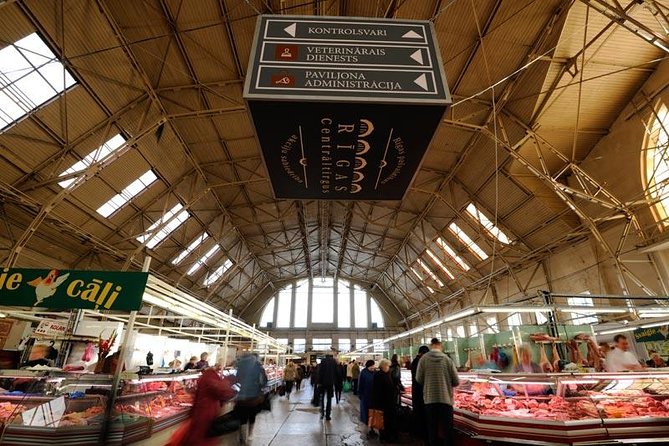
The traditional market is divided into five main food areas: meat, vegetables, dairy, fish, and gastronomy products. This layout makes the first part easy to follow. You move from one type of food to another, sampling along the way and seeing how much of Latvian cooking depends on simple, sturdy ingredients.
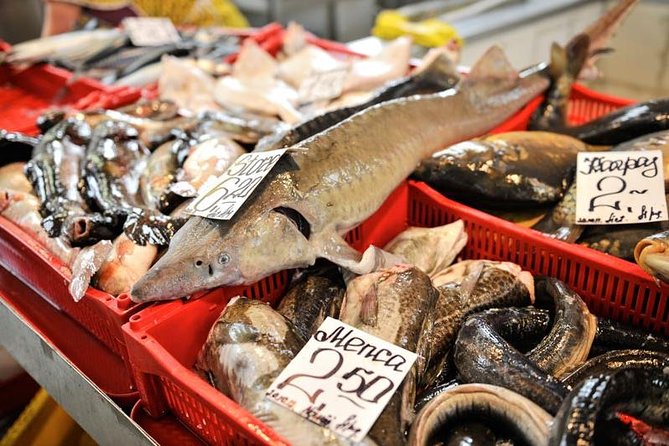
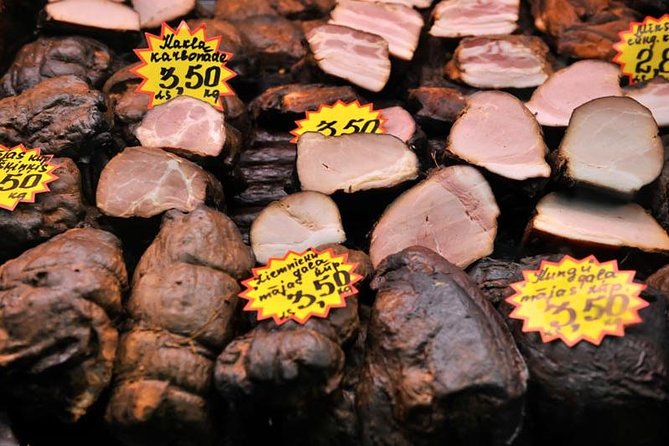
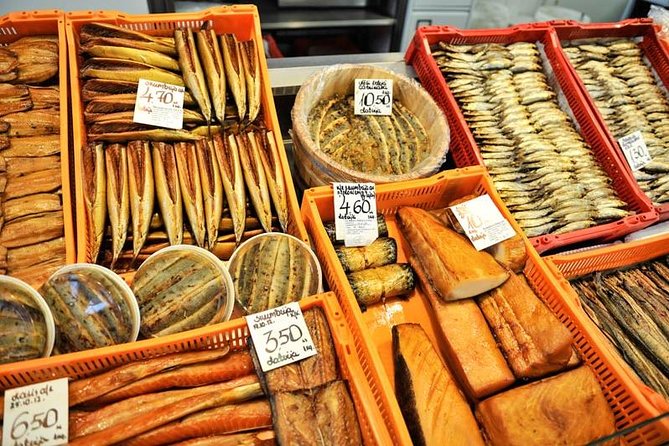
The meat pavilion is a good place to understand the importance of smoked and preserved foods. You might taste smoked meats and notice how preparation adds flavor while also helping food last through the colder months. The fish section brings in sprats and other seafood, with fried lampreys listed among the local specialties worth trying.
Fish can be a hard sell if you are cautious about strong flavors or unfamiliar textures. Still, this is precisely where a guided tasting has value. You can try a small portion rather than commit to a full dish, and the guide can explain how the food is used.
The dairy area may include cheese and other everyday products. Latvian food is not all dramatic or unusual. Some samples are likely to feel familiar, which gives you a useful contrast with hemp butter, salted mushrooms, or lampreys.
The vegetable and gastronomy sections round out the visit with produce, prepared foods, pastries, desserts, and drinks. One guide, Edgar, is praised for offering samples of smoked meats, cheese, pastry, fish, vegetables, desserts, and drinks. That range matters because it keeps the tasting from becoming a narrow parade of salty fish and pickled vegetables.
Local flavors worth trying
The suggested foods offer a solid snapshot of Latvia’s pantry. Hemp butter is one of the more unusual tastes and a good reason to take this tour rather than simply buy a familiar pastry. Rye bread is more approachable and gives you a direct sense of a common Latvian staple.
Sprats are another useful introduction. These small smoked fish are closely tied to the region’s food culture and may appear in ways that are easy to sample. Fried lampreys are more distinctive, and their unusual appearance may make them the food you remember most clearly.
Sauerkraut, honey, kvass, and salted or dried mushrooms show the range of preservation and storage methods used in Latvian homes. Kvass, a lightly fermented bread drink, offers a non-alcoholic taste of the region’s grain-based traditions. Honey provides a sweet counterpoint to fish, pickles, and smoked foods.
Beer is part of the experience too. One tasting stop has been especially praised for beer at Labietis, a Riga brewery and beer venue. The available details do not promise a particular beer or guarantee that every visit includes the same pour, so treat this as a possible highlight rather than a fixed menu item.
If you have dietary restrictions, allergies, or strong dislikes, ask before sampling. The tour includes many food categories, and the exact choices can vary with what vendors have available.
What the guide adds to the food
The food is only half the reason to book. The better guides connect each bite to Latvian customs and daily life. Dace is praised for explaining traditional foods that people might not try without help. Her approach appears to favor discovery without pressure, which is useful when you are facing a dish such as lamprey or a strong-smelling preserved product.
The cultural context focuses on real household concerns. You learn how Latvian families manage food during winter and how certain foods appear at holidays and festivals. That can include preservation methods, seasonal habits, and the reasons particular dishes became traditional.
This also helps you avoid a common market-tour problem: tasting a dozen items but remembering none of them. When you understand that sauerkraut, dried mushrooms, or smoked fish once served a practical purpose, each sample becomes part of a larger story.
The private format is another plus. Only your group participates, so you can ask questions without competing with a large crowd. It may also make the pace more comfortable for families or groups with different levels of interest in food. The tradeoff is that a private tour usually costs more than joining a large shared group, and the $77.89 price reflects that.
More market tours:
- Fun Walk Private Tour Around Central Market Riga
★ 4.5 · 3 reviews
The outdoor stalls and bargain hunting
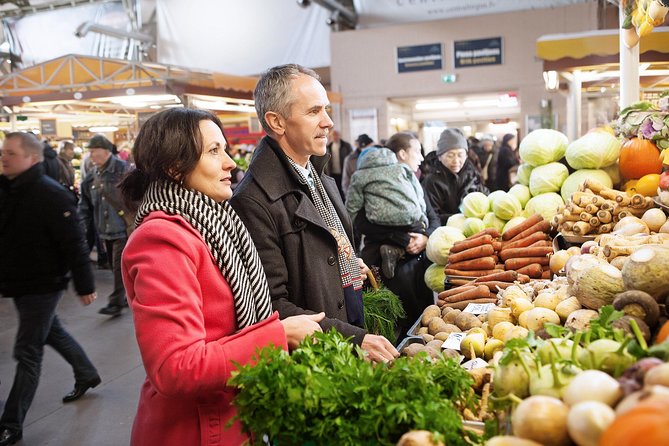
After the indoor pavilions, the outdoor area changes the feel of the visit. Stalls sell fruits, vegetables, garden plants, flowers, and flours. You may also find small kiosks offering souvenirs, clothes, perfume, knitwear, amber jewelry, and other goods.
The produce is presented as fresh and natural, with goods from Latvian farms and surrounding countries. That distinction is useful. Not everything you see will be Latvian-grown, so you should ask where an item comes from if local origin matters to you.
Price is part of the appeal. The market is described as offering competitive prices, with the possibility of bargaining. I would see this as a chance to compare prices and shop carefully, not a promise that every stand will negotiate. Produce, honey, bread, mushrooms, and small packaged foods may be easier to carry than delicate souvenirs or clothing.
This section also gives you a better look at ordinary shopping. The pavilions show how food is organized for sale, while the outdoor stalls reveal the everyday mix of local produce and practical goods. If you want a polished food lecture, this can feel rough around the edges. If you want a real market with changing stock and varied vendors, that is a strength.
A short walk to the Spikeri warehouses
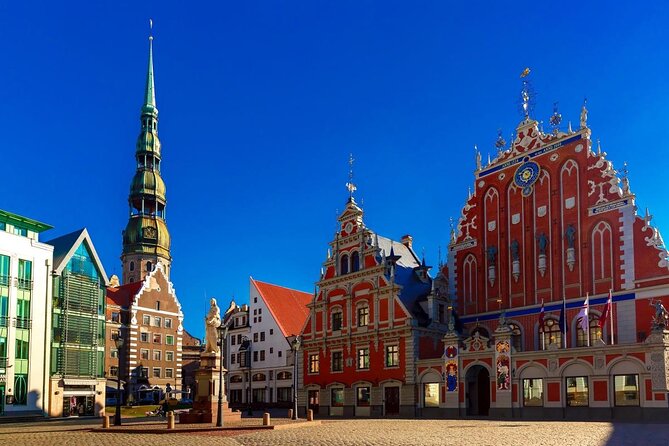
The Spikeri historic warehouse district is only a few minutes from the Central Market. Thirteen warehouses survive there today, giving you a nearby architectural stop after the food tasting.
The supplied details do not promise a full guided tour of every building, so keep your expectations modest. Spikeri works best as a short extension that adds context to the market area, rather than as a separate major sightseeing stop.
I like this part because it prevents the experience from ending with one more bite. You get a glimpse of the district’s older commercial setting and a chance to walk off some of the samples. If your schedule is tight, it is still close enough to fit naturally into the two-hour plan.
The modern Central Gastro Market
The newer Central Gastro Market brings a different mood. More than 20 caterers and two bars offer local Latvian dishes along with burgers, pizza, ramen, Thai food, and other international choices.
This is useful if your group cannot agree on what to eat. One person can choose a Latvian dish, another can order pizza, and someone else can try ramen or Thai food. It also gives you a look at Riga’s modern food scene.
The downside is clear: this section is less specific to Latvia. If your main goal is traditional food, spend your attention on the five older pavilions and the guide’s explanations. The Gastro Market works best as a contrast, not as the heart of the cultural experience.
Depending on the timing, you may have only a short look rather than a full meal. The advertised duration is about two hours, and that time must cover the pavilions, tastings, outdoor area, and nearby warehouses. Come ready to sample, not expecting a long restaurant sitting.
Is $77.89 a fair price?
At $77.89 per person, this is not a bargain market snack. You are paying for a private two-hour experience, a guide, multiple samples, cultural explanation, and the convenience of having someone select and explain unfamiliar foods.
The value is strongest if you are new to Latvian cuisine, enjoy food as a way to learn about a country, or want to try items you would not recognize on your own. It is also a good fit for a small private group that values questions and flexible conversation.
The value is weaker if you mainly want to shop for inexpensive produce or eat a full meal. You could browse the market independently and spend far less, though you would lose the explanations and guided tasting. Group discounts may improve the cost for larger parties, so check the final price before booking.
Because the experience lasts about two hours, you should think of it as an introduction rather than a full-day food tour. It gives you enough to understand the market and taste a range of products, then leaves you free to return on your own for anything you want to buy.
Timing, meeting point, and practical advice
The tour begins and ends at Riga Central Market, Rīgas Centrāltirgus, in the Latgale suburb of Riga. The market is near public transportation, which makes the meeting point practical for a city visit.
The stated operating period runs from August 2, 2019 through October 3, 2027, with hours listed as Monday through Friday from 11 a.m. to 6 p.m. Confirmation is sent within 48 hours, subject to availability. Since the experience is tied to market hours and vendor activity, book ahead if your Riga schedule is narrow. It is booked an average of 31 days in advance.
Wear comfortable shoes and avoid eating a large meal beforehand. You do not need to arrive starving, but the samples cover enough ground that a full stomach would blunt the experience.
English is offered, and most people can participate. Group discounts are available. Since this is a private activity, your own group takes part rather than joining a larger shared party.
Free cancellation is available up to 24 hours before the start time for a full refund. Cancellations or changes made less than 24 hours ahead are not accepted for a refund, with cut-off times based on local time.
Who should book this market experience?
I would recommend it to curious eaters who want a guided introduction to Latvia rather than a standard sightseeing walk. It is especially useful for first-time visitors who do not know which foods are local, how preserved dishes fit into daily life, or where to begin in such a large market.
It also suits couples, families, and private groups who want conversation with a guide. The private format gives you room to ask about ingredients, holidays, farming, and food customs.
You may want to skip it if you dislike sampling unfamiliar food, want a long sit-down meal, or prefer to explore markets alone. The price is hard to justify for simple browsing. The Gastro Market may also disappoint if you want every stop to be strictly traditional.
Should you book Riga Central Market?
Book it if you want context as well as food. The best parts are the samples, the explanations of winter preservation and holiday traditions, and the chance to taste things such as hemp butter, sprats, rye bread, and fried lampreys without ordering full portions.
The $77.89 price makes this a considered purchase, not an automatic pick. I would choose it early in a Riga visit, preferably when you are hungry and have time to return to the market afterward. If you value authentic food experiences and private guiding, it earns the cost. If you only want cheap snacks and produce, visit independently instead.
FAQ
Where does the Riga Central Market tour start?
It starts at Riga Central Market, Rīgas Centrāltirgus, in Riga, Latvia. The activity ends back at the same meeting point.
How long does the experience last?
The tour lasts approximately two hours.
What food can I taste?
Samples may include local specialties such as hemp butter, rye bread, fried lampreys, sauerkraut, kvass, honey, salted and dried mushrooms, smoked meats, cheese, pastries, vegetables, desserts, and drinks.
Is the food included in the ticket?
Yes. Samples from five different food pavilions are included with admission.
Is this a private tour?
Yes. Only your group participates in this private activity.
When can I cancel for a full refund?
You can cancel at least 24 hours before the experience start time for a full refund. Cancellations or changes made less than 24 hours before the start time are not accepted for a refund.
Recently added around Riga
- Tour from Riga to Vilnius: Bauska Castle, Rundale Palace and The Hill of Crosses★ 5.0 · 3 reviews
- Group Tour: Sigulda and Turaida from Riga.★ 4.5 · 3 reviews
- Fun Walk Private Tour Around Central Market Riga★ 4.5 · 3 reviews
- Hiking Adventure in Gauja National Park – 7 Days★ 5.0 · 3 reviews
- Latvia’s Switzerland and Gauja National Park Tour★ 5.0 · 3 reviews
- Jurmala sunset tour★ 4.5 · 3 reviews
- Riga Medieval Dinner★ 4.0 · 4 reviews
- Private Snowmobile or ATV Safari with Riga Black Balsam Tasting★ 5.0 · 4 reviews
Latvian Food & Market Tours, compared.
Latvian food tasting tour at Riga Central market
Read our review →
Medieval Experience: Guided Sightseeing and Food Tasting
Read our review →
Shared Activity Riga Black Balsam 18th Century Degustation
Read our review →
Riga Black Balsam XO Tasting Exclusive Flavor in Limited Edition
Read our review →
Private Snowmobile or ATV Safari with Riga Black Balsam Tasting
Read our review →
Fun Walk Private Tour Around Central Market Riga
Read our review →Browse the lists this tour appears in