
Reviewed · HILL OF CROSSES DAY TRIPS
Tour from Riga – Vilnius via Bauska, Rundale, The Hill of Crosses
Three great stops make the transfer worthwhile. This Riga to Vilnius day trip turns a necessary journey into a full sightseeing day, with visits to Bauska Castle, Rundale Palace, and Lithuania’s Hill of Crosses. You get comfortable transport, space for luggage, and either a guidebook or live explanations along the way.
I especially like the one-way design, since you can leave Riga in the morning and arrive in central Vilnius instead of spending a day retracing your route. I also like the choice of stops: Rundale Palace gives you grand architecture and gardens, while the Hill of Crosses offers something stranger, more personal, and deeply tied to Lithuanian identity.
The main caution is the tight schedule. You have about eight to nine hours on the road, and a strict departure time at every stop. Most guides have been friendly and helpful, but the quality of the commentary and the driver’s manner can vary. If you need a relaxed pace, this is not your trip.
In This Review
- Five things to know before you book
- Why this Riga to Vilnius transfer works
- Starting at the Latvian Riflemen Monument
- Bauska Castle: ruins, rivers, and a short first stop
- Rundale Palace: Latvia’s grandest interior stop
- The Hill of Crosses: a powerful final stop
- The guide can shape the entire day
- Food, tickets, and the real cost
- Who should choose this trip?
- Arriving in Vilnius Cathedral Square
- Should you book the Riga to Vilnius sightseeing transfer?
- FAQ
- Where does the tour start in Riga?
- What time does the tour depart?
- Where does the tour end in Vilnius?
- How long does the experience take?
- Which days does the tour operate?
- Is a passport required?
- Are entrance tickets included?
- Is food included?
- Is luggage allowed?
- How many people can join the tour?
- Is cancellation free?
Five things to know before you book
- Bauska Castle gives you one hour to see a partly restored ducal residence and the ruins of an older Livonian fortress.
- Rundale Palace receives about two hours, enough for the museum, gardens, and possibly lunch.
- The Hill of Crosses is free to enter, and its thousands of crosses make it the most unusual stop of the day.
- The transfer ends in Vilnius Cathedral Square, a handy central arrival point.
- The price is $114.65 per person, including transport and luggage space but not admission tickets, food, or a dedicated guide service.
- Departures run Tuesday, Thursday, and Saturday at 9:00 a.m., with a maximum group size of 38.
Why this Riga to Vilnius transfer works
A direct bus gets you from Latvia to Lithuania, but it gives you little reason to look out the window. This trip adds three worthwhile stops without requiring separate day tours, local buses, or a return journey to Riga.
That is the real value. You are paying for transport between two capitals and adding sights that are awkward to reach on your own. Bauska and Rundale are in southern Latvia, while the Hill of Crosses lies in northern Lithuania near Šiauliai. The route makes geographic sense, even if the day feels full.
The advertised duration is about eight hours, but several people have found the full journey closer to nine hours. The timing depends on traffic, border conditions, the size of the group, and how efficiently everyone returns to the vehicle. You should plan for most of the day rather than expecting a quick transfer.
The price of $114.65 is fair if you already need to go from Riga to Vilnius. A regular transfer would not include sightseeing, and visiting these places separately can cost more once you add local transport and entrance fees. The calculation changes if you only want to move between the cities. In that case, a direct bus may be simpler and cheaper.
More Hill of Crosses day trips:
- 2 countries! Hill of Crosses, Rundale Palace and Bauska castle
★ 5.0 · 225 reviews - From Riga: Hill of Crosses & Jelgava Highlights
★ 5.0 · 149 reviews - 5,5 Hour Small Group Tour to Hill of Crosses from Riga
★ 5.0 · 127 reviews
Starting at the Latvian Riflemen Monument
The meeting point is the Latvian Riflemen Monument at Latviešu strēlnieku laukums 1 in Riga. Departure is scheduled for 9:00 a.m., so you need to arrive ready with your luggage and passport.
A current valid passport is required because you cross from Latvia into Lithuania. Do not treat this as an entirely domestic ride just because both countries are in the European Union. Carry your passport with you throughout the day.
The vehicle can vary. It may be a comfortable minivan, a sedan for a very small group, or a larger vehicle when bookings are higher. Some rides have had only four or eight people, while the stated maximum is 38. Small groups make the day feel more personal, but you should not book expecting a private tour.
Luggage space is one of the useful features. You can bring a reasonable amount of luggage, which saves you from arranging separate storage or hauling bags through several connections. Still, reasonable amount is the important phrase. If you have oversized cases or a large number of bags, ask the operator before booking.
The ride is described as comfortable, with air conditioning promised. One passenger had a vehicle without working air conditioning, so this is worth checking if you are visiting during a hot spell. Vehicles may also have different seating arrangements. In one small group, one couple had to sit apart because of the layout.
Bauska Castle: ruins, rivers, and a short first stop
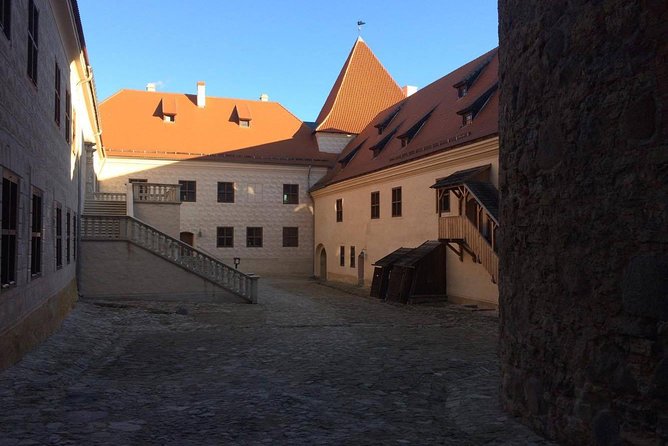
Bauska Castle sits between the Musa and Memele rivers near the town of Bauska. The setting is pleasant, and the site is easier to understand once you know that it contains two different structures from two different periods.
The older section is the Livonian Order Castle, built in the mid-15th century. Today, it is largely a ruin. The newer section was built at the end of the 16th century as a residence for the Duke of Courland. That portion has been restored and houses the Castle Museum.
The complex was badly damaged during the Great Northern War, when Russian forces blew up much of the ensemble. That contrast between restored rooms and broken fortress walls gives the visit its character. You are not seeing a single polished palace, but a site shaped by war, rebuilding, and changing political power.
You have one hour here, and that can feel short. Several people found this stop more rushed than the others, particularly if they wanted to explore both the museum and the ruins. If Bauska is your main interest, you may wish you had more time.
Admission is not included. The tour provides transport and time at the site, but you pay separately if you enter the museum or restored residence. Ask the driver how much time is available before buying a ticket, especially if the group has already fallen behind schedule.
Still, Bauska works well as the opening stop. It breaks up the drive early and gives you a first look at Latvia beyond Riga. Guides such as Adam, Alex, Andrew, and Andris have been praised for explaining the day clearly, though the amount of historical commentary can depend on who is driving.
Rundale Palace: Latvia’s grandest interior stop
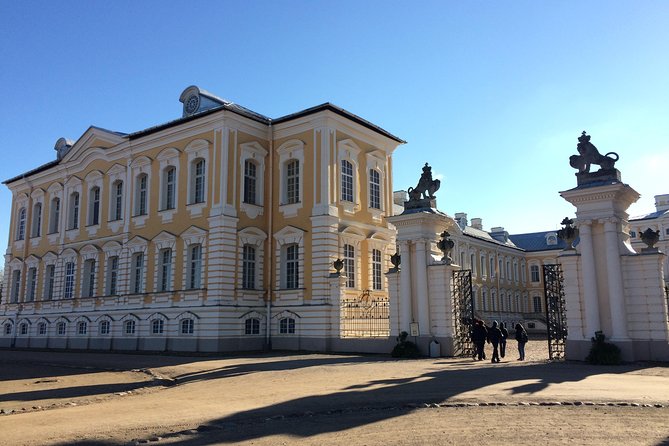
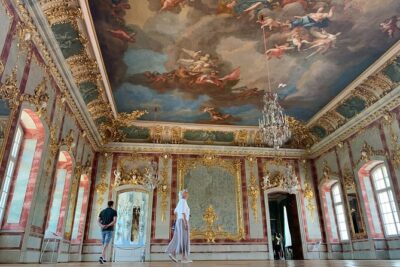
Rundale Palace is the main event for many people. It lies about 15 kilometres from the Latvian and Lithuanian border and was built in the 18th century as the summer residence of Ernst Johann von Biron, Duke of Courland.
The architect was Francesco Bartolomeo Rastrelli, whose work also includes the Winter Palace in Saint Petersburg. That connection helps explain the palace’s scale and decorative style. This is not a modest country house. It was built to project wealth, rank, and courtly ambition.
The palace has had a rougher practical life than its elegant rooms suggest. Over time, it served as a hospital, an elementary school, and even a grain store. Extensive restoration has returned much of the building to its former appearance, and the result is now presented as the Rundale Palace Museum.
You have about two hours here. That is a much better fit than the hour at Bauska. You can visit the museum, walk through the gardens, and pause for lunch without racing from room to room. One useful detail is that lunch at the palace has been possible during the stop, making it the most practical place to eat.
Admission is not included, so budget for a separate ticket. The exact cost is not provided here, but you should expect to pay at the entrance if you want to go inside. The gardens may also have their own access arrangements depending on the season and ticket type.
The palace can be unusually quiet. One group found the building nearly empty, which made the visit far more enjoyable than a crowded palace tour. You get time to look at the rooms without being pushed along by a large sightseeing crowd.
If you are mainly interested in interiors, design, or aristocratic history, Rundale is likely to be your favorite stop. If you prefer ruins and unusual cultural sites, you may find the Hill of Crosses more memorable.
More Rundale Palace and Bauska Castle trips:
- Group Day trip to Rundale Palace, Hill of Crosses & Bauska Castle
★ 5.0 · 92 reviews - Private Full-Day Trip to Hill of Crosses, Rundale Palace & Bauska
★ 5.0 · 36 reviews - Riga: Hill of Crosses & Guided Rundale Palace with Bauska Castle
★ 5.0 · 20 reviews - Hill of Crosses & Rundale Palace Tour
★ 5.0 · 18 reviews
The Hill of Crosses: a powerful final stop
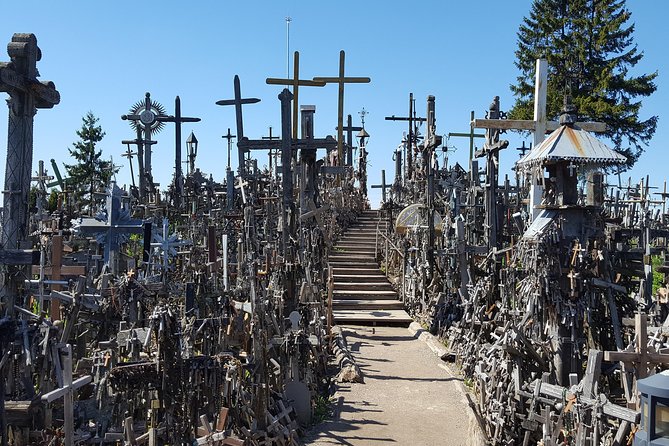
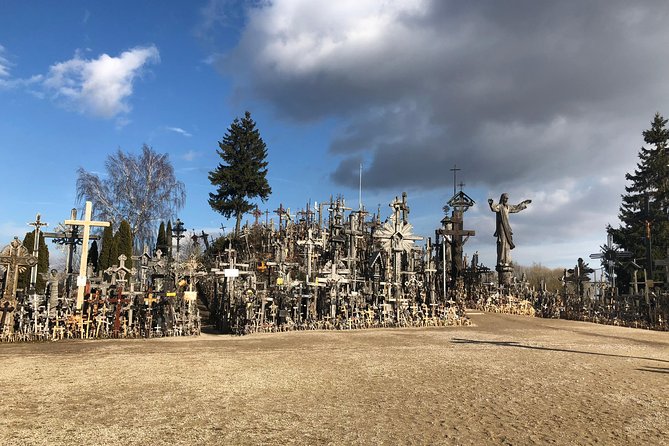
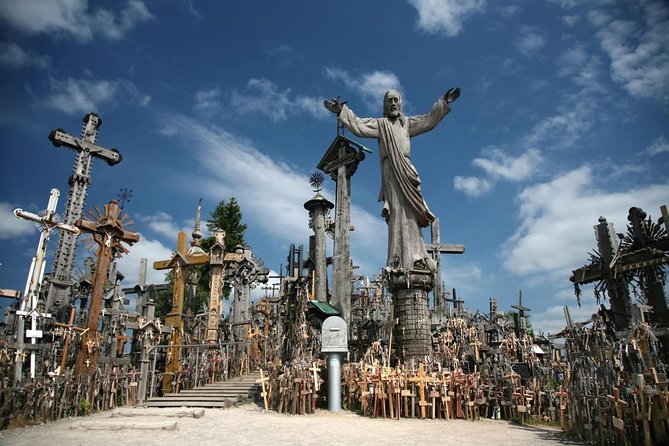
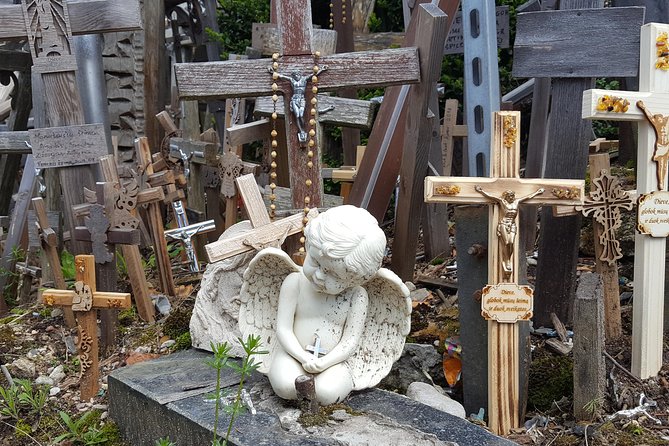
The Hill of Crosses, called Kryžių Kalnas in Lithuanian, is about 16 kilometres from Šiauliai. It is a small hill covered with crosses, religious images, rosaries, and other signs of personal devotion.
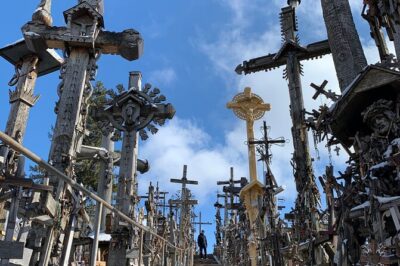
The number of crosses is often described as more than 200,000, though the collection changes as people add new ones. The site is both a religious place and a record of Lithuanian resistance. Crosses continued to represent faith and national identity during periods of occupation, even when authorities tried to remove them.
This is not a conventional monument with a grand building or a formal museum. You walk among the crosses, often on narrow paths, and take in the many different sizes and styles. Some are carefully made, while others are simple wooden signs. The sheer number creates an unusual feeling, part pilgrimage site and part folk-art collection.
Entry is free, which helps balance the separate admission fees at the castles. You have about one hour, enough to walk through the main area and take photographs. Wear practical shoes, since the ground may be uneven.
For many people, this is the day’s highlight. The setting is visually striking, but the history gives it weight. You are not simply looking at a large collection of crosses. You are seeing how ordinary people used religious symbols to express hope, memory, and defiance.
The stop is also more personal than Bauska or Rundale. You can learn the basic history from the driver or guidebook, but much of the experience comes from walking quietly and noticing individual crosses. Keep your expectations respectful. This is an active place of faith, not just a photo stop.
The guide can shape the entire day
The driver often serves as the guide, timekeeper, luggage helper, and practical problem solver. When this works well, it is a major advantage.
Adam has been praised for being friendly, safe, helpful, and good at recommending places to eat. Andris has been described as punctual and clear about the schedule, even finding a workable drop-off during a Vilnius marathon. Alex has received praise for keeping the ride interesting and positive.
Some drivers have shared local food suggestions, including a stop for cepelinai, a traditional Lithuanian dish. Others have answered questions about Latvia and Lithuania during the drive. This extra conversation can make a transfer feel closer to a small group tour than a simple shuttle.
But the experience is not guaranteed to be warm. One guide, Andrew, was described as overly strict and rude about timing, while another passenger praised the same guide’s knowledge. A separate complaint concerned an aggressive tone and poor manners. The practical lesson is simple: expect a driver-led transfer, not a consistently polished guided tour.
The schedule is strict for a reason. If one person is late, the delay affects every stop and the final arrival in Vilnius. You should note the return time each time you leave the vehicle, keep your phone with you, and avoid wandering far from the meeting point.
At the same time, strict timing should not mean shouting or uncomfortable behavior. The best guides explain the rules at the start and use them fairly. Your enjoyment will depend partly on the guide’s style and partly on how cooperative the group is.
Food, tickets, and the real cost
The $114.65 price includes comfortable transportation, reasonable luggage space, and either a guidebook or live guide support. Food, drinks, and entrance tickets are extra. A dedicated guide service is also not included, so do not assume you are buying a full private guided tour.
Rundale is the most likely place to eat because the two-hour stop allows time for a seated meal. You can also ask the driver for suggestions. One guide introduced a group to cepelinai, giving the journey a more local flavor than a standard roadside snack.
Bring water and a small snack if you prefer not to depend on the stops. The day has several scheduled movements, and the vehicle may leave promptly. Do not count on being able to buy food at every location.
The tour is good value for a solo visitor, a couple, or anyone changing cities during a Baltic trip. It is especially useful if you have limited time in Riga and would otherwise miss southern Latvia completely. Families and older visitors may also appreciate the luggage handling and vehicle transfer, though the compact schedule can be tiring.
Who should choose this trip?
Choose it if you want to see more than Riga and Vilnius, dislike arranging several transport connections, and are happy with a planned day. It suits first-time visitors who want a broad introduction to two Baltic countries.
It also suits solo travelers. Small groups can become social, and several people have made new friends during the ride and later spent time together in Vilnius. The trip can feel surprisingly personal when the vehicle is lightly booked.
You may want another option if you need a slow museum visit, have mobility concerns that make frequent vehicle changes difficult, or dislike fixed departure times. The tour does not promise extensive accessibility details, and the stop times cannot be adjusted around individual preferences.
It is also not ideal if your main goal is to explore Bauska Castle in depth. One hour is enough for an introduction, not a thorough visit. Rundale receives more generous treatment, and the Hill of Crosses is compact enough to see comfortably in the allotted time.
Arriving in Vilnius Cathedral Square
The journey ends at Cathedral Square in central Vilnius, Katedros aikštė. This is a useful arrival point rather than an out-of-town transport terminal, and it puts you close to the heart of the city.
The scheduled arrival is around the early evening, though the exact time can shift with traffic and group delays. One guide worked around a city marathon and dropped the group as close as possible to the original point. That kind of flexibility is helpful, but you should avoid scheduling a nonrefundable evening activity immediately after arrival.
The final drop-off is one of the tour’s strongest practical features. You begin in central Riga, see three difficult-to-reach sights, and finish in central Vilnius with your luggage. That saves both time and the hassle of backtracking.
Should you book the Riga to Vilnius sightseeing transfer?
Book it if the route fits your plans. At $114.65, this is a smart use of a transfer day, especially when you want to see Rundale Palace and the Hill of Crosses without arranging separate transport.
Go in expecting a full day, a firm timetable, extra entrance costs, and a driver whose guiding style may vary. Arrive with your passport, keep your belongings organized, and return to the vehicle on time. If you can handle those limits, the combination of Bauska’s ruins, Rundale’s restored splendor, and the Hill of Crosses’ solemn atmosphere gives you a memorable way to cross the Baltics.
FAQ
Where does the tour start in Riga?
It starts at the Latvian Riflemen Monument, Latviešu strēlnieku laukums 1, Centra rajons, Riga.
What time does the tour depart?
The scheduled start time is 9:00 a.m.
Where does the tour end in Vilnius?
The tour ends at Cathedral Square, Katedros aikštė, in Vilnius.
How long does the experience take?
The stated duration is approximately eight hours, although the full journey can take around nine hours depending on conditions and group timing.
Which days does the tour operate?
It operates on Tuesday, Thursday, and Saturday.
Is a passport required?
Yes. A current valid passport is required on the day of travel.
Are entrance tickets included?
No. Entrance tickets for Bauska Castle and Rundale Palace are not included. Entry to the Hill of Crosses is free.
Is food included?
No. Food and drinks are not included. There may be time to eat at Rundale Palace.
Is luggage allowed?
Yes. The transport provides room for a reasonable amount of luggage.
How many people can join the tour?
The maximum group size is 38 people, though some departures may operate with much smaller groups.
Is cancellation free?
Yes. You can cancel up to 24 hours before the start time for a full refund. Changes or cancellations made less than 24 hours before departure are not accepted for a refund.
Recently added around Riga
- Tour from Riga to Vilnius: Bauska Castle, Rundale Palace and The Hill of Crosses★ 5.0 · 3 reviews
- Group Tour: Sigulda and Turaida from Riga.★ 4.5 · 3 reviews
- Fun Walk Private Tour Around Central Market Riga★ 4.5 · 3 reviews
- Hiking Adventure in Gauja National Park – 7 Days★ 5.0 · 3 reviews
- Latvia’s Switzerland and Gauja National Park Tour★ 5.0 · 3 reviews
- Jurmala sunset tour★ 4.5 · 3 reviews
- Riga Medieval Dinner★ 4.0 · 4 reviews
- Private Snowmobile or ATV Safari with Riga Black Balsam Tasting★ 5.0 · 4 reviews
Hill of Crosses Day Trips, compared.
2 countries! Hill of Crosses, Rundale Palace and Bauska castle
Read our review →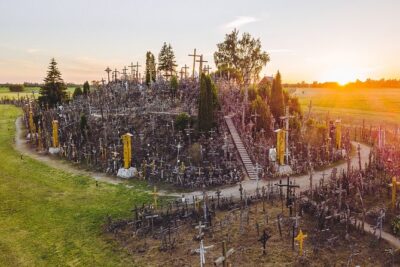
5,5 Hour Small Group Tour to Hill of Crosses from Riga
Read our review →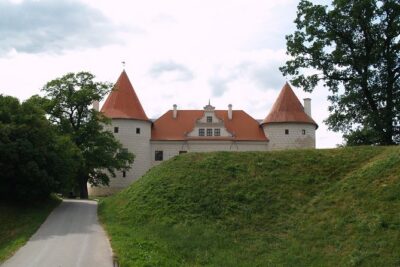
Group Day trip to Rundale Palace, Hill of Crosses & Bauska Castle
Read our review →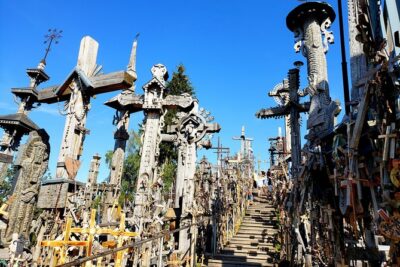
Private trip – Hill of Crosses / 2 countries in 1 day
Read our review →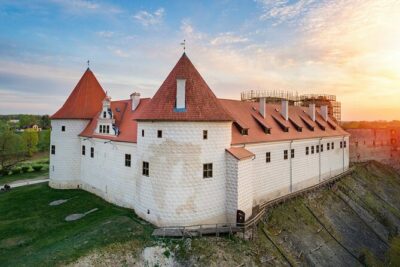
Private Full-Day Trip to Hill of Crosses, Rundale Palace & Bauska
Read our review →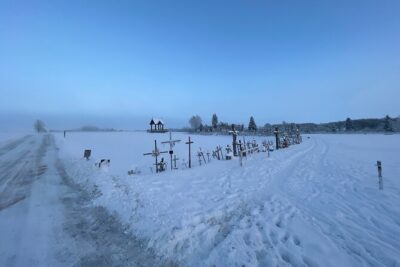
Hill of Crosses and Jelgava Gems Tour – 2 countries in 1 day
Read our review →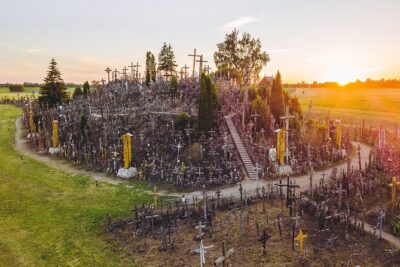
Hill of Crosses & Guided Rundale Palace with Bauska Castle
Read our review →Browse the lists this tour appears in