
Reviewed · SIGULDA & GAUJA NATIONAL PARK TRIPS
All Inclusive Honest History Tour – Āraiši, Cēsis, Līgatne, Sigulda
History comes alive outside Riga. This private, all-inclusive tour links an ancient lake settlement, a medieval castle, an old paper-mill village, a secret Soviet bunker, and the scenic Gauja area in one full day. I especially like the private transportation, which keeps the day flexible, and the fact that lunch and entrance fees are included instead of being added one by one along the way.
The tour also gives you real variety. You move from ninth-century wooden homes to Cold War control rooms, with a traditional Latvian meal in Līgatne between them. The main drawback is the pace: 11 to 12 hours is a long day, and several stops involve walking outdoors, uneven ground, or optional hiking.
Guide quality matters on a private outing, and Harijs receives especially warm praise for his stories about Latvia and his easy conversation. Still, this is not a relaxed, slow-paced village tour. It is a broad regional sweep for you if you want to see a great deal beyond Riga in a single day.
In This Review
- Five Details That Shape the Experience
- Why This Makes a Strong Day Trip From Riga
- Āraiši Lake Castle and Latvia’s Early Settlers
- Cēsis Castle and the Story of Medieval Power
- Cēsis Old Town, Parks, and a Short Break
- Līgatne Paper Mill Village and Industrial Latvia
- Līgatne’s Cellars and the Latvian Lunch
- Nine Metres Underground in the Secret Soviet Bunker
- Sigulda Views and an Optional Hike
- Timing, Transport, and the Private Format
- Who Should Book This Tour?
- FAQ
- Where does the tour start?
- How long does the experience last?
- Is this a private tour?
- Are entrance fees included?
- Is lunch included?
- Can the itinerary be changed?
- Should You Book It?
Five Details That Shape the Experience
- A reconstructed lake village: Āraiši Lake Castle recreates a fortified Latgalian settlement on a small island using experimental archaeology.
- A serious medieval site: Cēsis Castle combines an ancient hillfort, Teutonic Order ruins, a tower, a manor house, and a castle park.
- A town built around paper: Līgatne preserves a former industrial village tied to a paper mill that opened in 1815.
- A private bunker visit: You visit the Soviet bunker with your own guide and the bunker’s local guide, rather than joining a large public group.
- A Latvian lunch by the river: Līgatne provides the meal stop, with traditional food in a restaurant beside the river.
- Sigulda finishes the day: Viewpoints, the Gauja River bridge, a possible cave stop, and an optional short hike close the tour.
Why This Makes a Strong Day Trip From Riga
Riga is the natural base for exploring Latvia, but many of the country’s most revealing places lie outside the capital. This tour takes you into the countryside and connects sites from several very different periods. You are not simply looking at one castle and returning to Riga. You are tracing how people lived, worked, ruled, and prepared for disaster.
The route also has a useful rhythm. Āraiši opens with early settlement life. Cēsis shifts to medieval power and town life. Līgatne shows industrial and working-class history. The bunker brings you into the Soviet period. Sigulda then gives you open views and fresh air at the end.
That range is the tour’s main strength. I like trips that explain a country through contrast, and this one does that well. You see timber homes on a lake, stone fortifications, factory buildings, hand-dug cellars, underground offices, and river scenery in one day.
The cost is $376.22 per person. That is not a budget excursion, but the price includes private transport, all stated entrance fees, a traditional lunch, and a full day with a guide. If you are traveling as a small group, the value improves because you are paying for a private vehicle and a flexible format rather than a standard coach outing. Group discounts are also available.
The tradeoff is time. With seven stops and a drive from Riga into the Gauja area, some visits are necessarily brief. You will get a strong introduction to each place, but you will not have hours to explore every museum room or walking path.
More Sigulda and Gauja National Park trips:
- Private Full-Day Trip to Turaida, Sigulda, and Cesis
★ 4.5 · 52 reviews - Full-Day Private Trip to Cesis, Sigulda and Turaida from Riga
★ 4.5 · 42 reviews - From Riga: Sigulda & Turaida Legends Group Tour
★ 5.0 · 41 reviews
Āraiši Lake Castle and Latvia’s Early Settlers
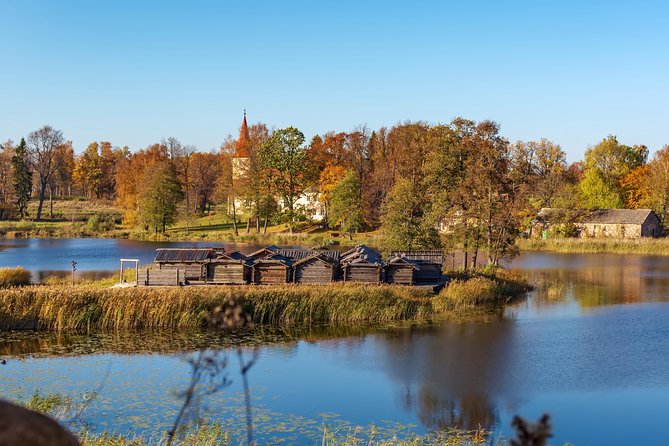
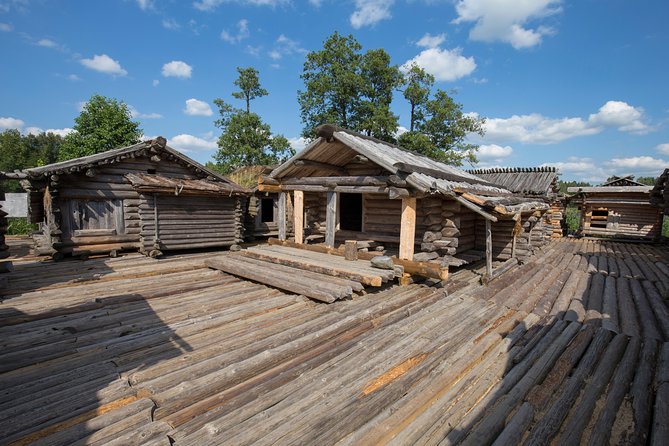
The first stop introduces a side of Latvia that many people miss. Āraiši Lake Castle is a reconstruction of a fortified settlement built on a small, flooding island. Ancient Latgalians lived there in the ninth and tenth centuries, and the water helped protect the village.
This is not a modern fantasy village built only for appearance. The reconstruction uses copies of ancient tools and methods, with the goal of showing how the settlement may have worked. You can walk among the wooden buildings, look inside some homes, and consider the practical reasons for choosing a wet island as a permanent base.
I find this stop valuable because it turns early Latvian history into something physical. Instead of reading a date on a wall, you see the shape of the homes and the defensive setting. You get a clearer sense of daily life, even though the visit lasts about one hour.
The setting also gives you a gentle start to the day. You are outdoors, moving around a compact site rather than standing in a formal museum. Wear shoes suitable for paths and damp ground. The information provided does not specify the exact walking surface, so anyone who needs a fully smooth route should ask the provider before booking.
Cēsis Castle and the Story of Medieval Power
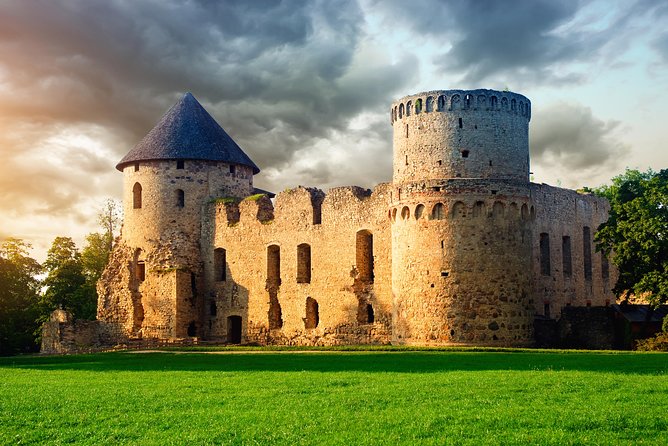
Cēsis is one of the strongest historical stops on the route. The castle began as a major base of the Teutonic Order in the Baltics and later became part of the Livonian political world. Its ruins are considered among Latvia’s best-preserved medieval castle remains.
The visit begins at Riekstu Hill, an older hillfort connected with the Vendi tribe. The Vendi invited German crusaders to help them before the crusaders completed their own castle. That detail gives the site an important layer: the medieval fortress did not appear on an empty patch of land. It grew out of earlier settlement and shifting local alliances.
From the hillfort, you continue through the castle park to the main complex. You can see the inner yard, tower, and a manor house added at a later time. The mix of medieval ruins and later construction helps you read the site as a lived-in place rather than a single frozen monument.
The castle also carries the marks of war. In 1577, during a siege by the army of Ivan the Terrible, 300 people sought refuge inside. The castle suffered badly, and its ruined condition is part of its story.
Plan for about an hour here. The tour gives you a useful walk and historical explanation, but you should not expect an exhaustive museum visit. Castle ruins can include steps, uneven stones, and exposed sections. If you enjoy old fortifications, this will likely be one of the day’s highlights. If you prefer polished interiors and easy paths, it may feel demanding.
Cēsis Old Town, Parks, and a Short Break
Cēsis deserves its own stop after the castle. The town began as a settlement serving the castle of the Livonian knights, then grew into a larger trading center and joined the Hanseatic League. Its street network has remained in place for hundreds of years.
That continuity is what you notice during the walk. You are not only viewing isolated monuments. You are following streets shaped by the town’s long development, then passing parks and monuments before taking a short coffee and snack break.
The town is also known as a regional center for art, culture, and recreation. The tour does not promise a long cultural program, so I would treat this hour as a chance to get your bearings and enjoy the town’s atmosphere rather than trying to cover every attraction.
Coffee and tea are not included, so bring some spending money for the break. The pause also matters physically. By this point, you have already walked at Āraiši and Cēsis Castle, and the day still has several stops ahead.
More history and heritage tours:
- Riga Jewish History Tour
★ 5.0 · 9 reviews - Cesis: Medieval Heritage and Natural Treasures
★ 4.0 · 4 reviews - Riga’s Architecture: A self-guided audio tour of the city’s art nouveau history
★ 5.0 · 3 reviews
Līgatne Paper Mill Village and Industrial Latvia
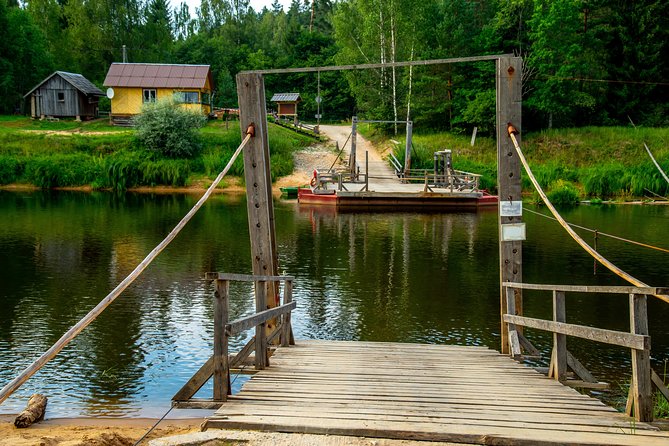
Līgatne changes the subject from rulers and fortresses to work. The paper mill began production in 1815 and quickly became the largest paper factory in Latvian territory and across the Russian Empire. It made ordinary writing paper, military map paper, and watermarked paper.
During the interwar years, the mill exported to all five continents. The factory closed in 2014 after nearly two centuries of operation, but the former village still shows how industrial work shaped local life.
The visit focuses on the historical center of the paper-mill village. As you walk through the area and along a small trail, you can see factory remains and the old barracks where workers lived. This is a different kind of heritage from Cēsis Castle. The point is not grand architecture. It is the relationship between production, housing, and a community built around one employer.
I like this stop because it adds social history to the day. You begin to see Latvia not only through noble families and military orders, but also through factory workers and export trade. The tour allows about an hour, enough for a walk and an introduction without turning the visit into a full industrial archaeology program.
Līgatne’s Cellars and the Latvian Lunch
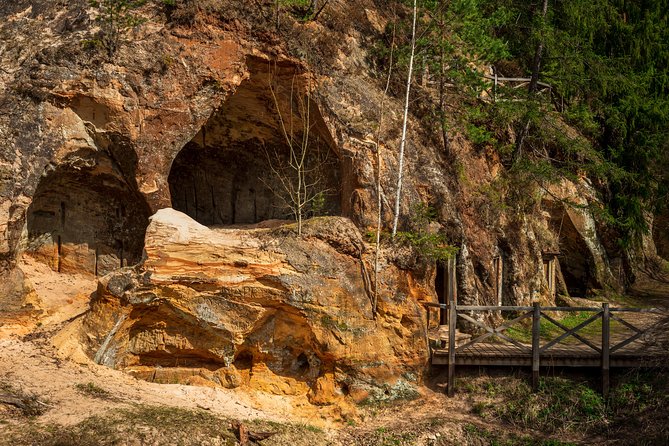
Līgatne is located in Gauja National Park and is known for sandstone cliff formations. Local people manually dug caves into some of these cliffs and used them as cellars for vegetables, wine, and other storage. Some of the caves are open to the public, so you may get a look at how these spaces were used in the past and how they function today.
Eight species of bats also use the caves as winter homes. That fact is a useful reminder that these are not just decorative tunnels. They remain part of the local environment. The details provided do not state whether every cave is open during every visit, so your guide will determine what you can see on the day.
Lunch takes place in Līgatne at a restaurant directly beside the river. A traditional Latvian meal is included, which makes this more than a quick roadside stop. You get a proper pause in the middle of a demanding day and a chance to try local food without having to choose a restaurant or manage the bill.
Coffee and tea are excluded, but the meal itself is included. If you have dietary needs, ask about them before booking because no special menu information is provided.
Nine Metres Underground in the Secret Soviet Bunker
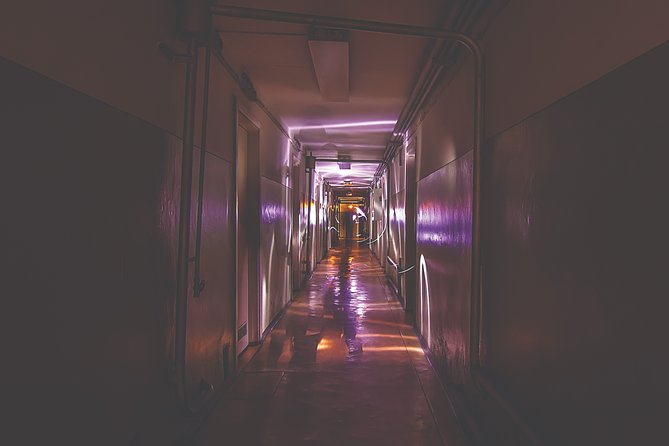
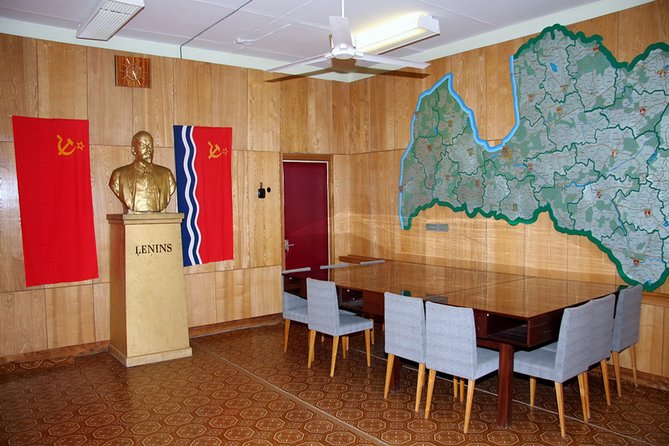
The bunker is the most unusual stop. It lies nine meters below ground and was built as a shelter for Latvia’s communist elite in the event of nuclear war. The facility covers about 2,000 square meters, or roughly 21,500 square feet.
The secrecy was extreme. Even people working in the rehabilitation center directly above did not know the bunker existed for 30 years. Inside, authentic Soviet-era exhibits have survived, giving the visit a direct physical link to the period rather than a display assembled from unrelated objects.
This is also the most private part of the day. Your group is joined only by your tour guide and the bunker’s local guide. That smaller setting is useful here because you can ask questions about the rooms, equipment, purpose, and political system without being pushed along in a large crowd.
The visit lasts about 90 minutes, making it the longest scheduled stop. It is worth the time because the bunker tells you about fear, secrecy, government control, and Cold War planning in a way a general history museum cannot.
The practical caution is simple: you are going underground. The information provided confirms the depth and size, but it does not list every accessibility detail. Ask ahead if stairs, narrow passages, or other conditions could affect your visit.
Sigulda Views and an Optional Hike
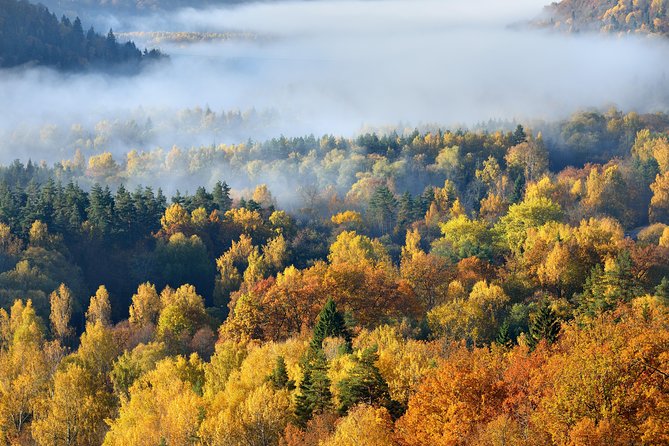
Sigulda is the final stop and a good choice for the end of a long day. It is known as one of Latvia’s most scenic towns, as well as a center for winter sports and historical sites. Here, the focus turns away from indoor history and toward the Gauja River area.
The plan may include several viewpoints, the bridge over the Gauja, a possible cave stop, and a short hike if you want one. The scheduled time is about 30 minutes, so do not expect a long walking excursion or a full tour of Sigulda’s attractions.
That short visit still serves a purpose. After the enclosed bunker and the built-up historical sites, you get open views and a final look at the region’s natural setting. The hike is optional, which helps you choose between stretching your legs and saving energy for the return to Riga.
Because the tour ends here after a full day, think about your own stamina. If you enjoy walking, the optional hike adds a nice finish. If you are tired, the viewpoints and bridge may be enough.
Timing, Transport, and the Private Format
Pickup is offered, with an 8:00 a.m. start. The full experience lasts around 11 to 12 hours, so you should keep the entire day free. Private transportation removes the need to arrange separate buses or trains between Āraiši, Cēsis, Līgatne, Sigulda, and Riga.
The private format is especially useful because the attractions are spread across the region and the schedule has several moving parts. You can ask questions throughout the day, and the attraction choices can be adjusted by adding or dropping stops. The exact limits of those changes are not specified, so discuss your priorities before departure.
A private tour also means the experience is shaped around your group. Harijs is named in the available feedback and was praised for telling many stories about Latvia while keeping conversation easy. That kind of guide is a major asset on a day when the sites cover thousands of years.
The format is best for couples, families, or small groups who value context and convenience over the lowest possible price. It is less suitable if you want to spend a whole afternoon at one castle, take a slow village lunch, or travel at an unhurried pace.
Who Should Book This Tour?
I would choose this tour if I had limited time in Latvia but wanted more than Riga. It gives you early settlement archaeology, medieval history, industrial heritage, Soviet history, local food, and Gauja scenery without requiring you to plan the route yourself.
It is particularly strong for people who enjoy contrasts. The wooden lake village feels far removed from the Teutonic castle. The paper-mill village feels different again, and the bunker takes you into a secret world below a modern building. Those shifts keep the day interesting.
Families with older children may appreciate the variety, especially the bunker and castle. History-focused visitors will get the most from the guide’s explanations. Couples and small groups can also benefit from the private setting, especially if they want to ask questions or adjust the route.
I would hesitate if you dislike long days, outdoor walking, underground spaces, or a packed schedule. The $376.22 price also deserves thought. It makes better sense when you value private transport, included admissions, lunch, and a full guiding service. If you only want one nearby attraction, booking separate transport may cost less, though it will not provide the same range in one day.
Free cancellation is available when you cancel at least 24 hours before the start time. Changes or cancellations made later are not accepted for a refund.
FAQ
Where does the tour start?
The tour starts in Riga, with pickup offered. The stated start time is 8:00 a.m.
How long does the experience last?
The tour lasts approximately 11 to 12 hours.
Is this a private tour?
Yes. Only your group participates, and private transportation is included.
Are entrance fees included?
Yes. All listed tickets and entrance fees are included, including the Āraiši Lake Dwelling Site, Cēsis Medieval Castle, Līgatne Paper Mill area, and Secret Soviet Bunker.
Is lunch included?
Yes. A traditional Latvian lunch in a riverside restaurant in Līgatne is included. Coffee and tea are not included.
Can the itinerary be changed?
The experience can be customized by adding or dropping attractions. Ask the provider about your preferred changes before the tour.
Should You Book It?
Book it if you want a big, carefully connected day outside Riga and prefer a private guide to independent transport planning. The combination of Āraiši, Cēsis, Līgatne, the Soviet bunker, and Sigulda gives you a broad view of Latvia that few single attractions can match.
Skip it if your ideal holiday moves slowly or if you want deep time at each site. For the right group, though, the included lunch, admissions, transport, and private guiding make the high price easier to justify. The secret bunker and the old paper-mill village are the details that make this tour more than a standard castle outing.
Recently added around Riga
- Tour from Riga to Vilnius: Bauska Castle, Rundale Palace and The Hill of Crosses★ 5.0 · 3 reviews
- Group Tour: Sigulda and Turaida from Riga.★ 4.5 · 3 reviews
- Fun Walk Private Tour Around Central Market Riga★ 4.5 · 3 reviews
- Hiking Adventure in Gauja National Park – 7 Days★ 5.0 · 3 reviews
- Latvia’s Switzerland and Gauja National Park Tour★ 5.0 · 3 reviews
- Jurmala sunset tour★ 4.5 · 3 reviews
- Riga Medieval Dinner★ 4.0 · 4 reviews
- Private Snowmobile or ATV Safari with Riga Black Balsam Tasting★ 5.0 · 4 reviews
Sigulda & Gauja National Park Trips, compared.
Full-Day Private Trip to Cesis, Sigulda and Turaida from Riga
Read our review →
Hike In Gauja National Park – Up And Down The Switzerland Of Latvia
Read our review →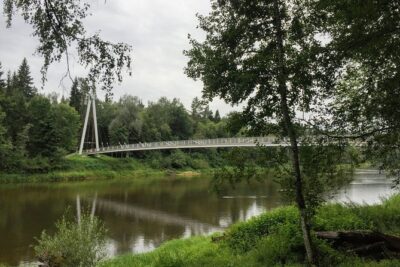
Discover Best Of Gauja National Park In One Day
Read our review →
Private Day Tour to Sigulda, Turaida Castle and Soviet Bunker
Read our review →Browse the lists this tour appears in