
Reviewed · ART NOUVEAU TOURS
Riga’s Architecture: A self-guided audio tour of the city’s art nouveau history
Riga turns architecture into a history lesson. This self-guided walk takes you from the Latvian National Museum of Art along Alberta Street, where ornate facades explain how Riga became an Art Nouveau capital. I like the clear, well-paced commentary and the freedom to stop when you want. I also like that offline maps and audio work without a data connection. The main drawback is simple: you get no live guide to answer questions or adjust the route.
For about $5.20, this is an easy way to add structure to a short visit. The walk lasts roughly 30 to 45 minutes, and the small route stays focused on Riga’s most famous Art Nouveau buildings. You will need your own smartphone and headphones, and the nonrefundable booking makes it wise to check your plans before paying.
In This Review
- Key points to know before you go
- Why Riga is such a good city for Art Nouveau
- Starting beside the Latvian National Museum of Art
- Elizabetes 10b and the first lesson in decoration
- Alberta 2a and the architects behind the facades
- Alberta 4 and Riga’s residential character
- Alberta 11 and the move toward National Romanticism
- Alberta 13 and the pleasure of looking upward
- Ending at Alberta 12 and one final architectural view
- What the audio format does well
- Is $5.20 good value for Riga?
- Who should choose this walk?
- FAQ
- Where does the Riga Art Nouveau audio tour start?
- Where does the tour end?
- How long does the audio tour take?
- How much does the tour cost?
- Which buildings are included on the route?
- Is a museum ticket included?
- Do I need my own phone and headphones?
- Can I use the tour without mobile data?
- Should you book it?
Key points to know before you go
- Riga has more than 800 Art Nouveau buildings, giving this short walk an unusually strong subject.
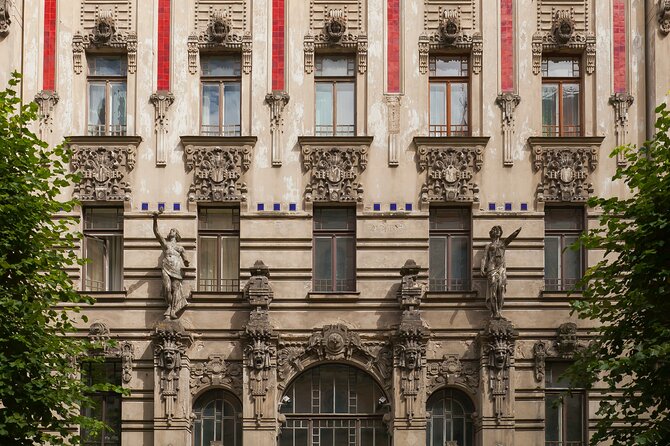
- Mikhail Eisenstein’s decorative work is a major focus, with stops on Alberta Street showing his dramatic style.
- The route covers six main points, beginning at the Latvian National Museum of Art and ending at Alberta 12.
- Offline audio, maps, and geodata let you follow the walk without relying on mobile service.
- National Romanticism adds a distinctly Latvian chapter to the story, beyond the better-known decorative facades.
- The $5.20 price is low, especially if you want a private walk without arranging a set meeting time.
Why Riga is such a good city for Art Nouveau
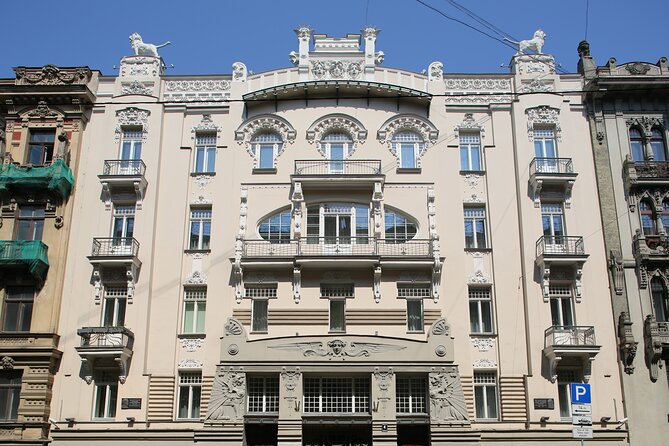
Riga is not merely home to a few handsome Art Nouveau facades. It has more than 800 buildings in the style, and the city is described as having the highest concentration of Art Nouveau architecture in the world. That changes the way you look at the streets. Instead of treating one building as an isolated curiosity, you begin to see a whole district shaped by the movement.
This tour gives you a basic visual guide before showing you the best examples. You learn how to identify Art Nouveau through decoration, flowing lines, sculptural details, and carefully designed entrances. The value is not just in hearing dates and names. It is in learning what to look for when you continue walking through Riga on your own.
The route also explains how local architects moved beyond imported European fashions. Riga developed a Latvian form called National Romanticism, which gives the tour a useful local angle. You are not simply looking at pretty buildings. You are following a change in taste, identity, and architectural ambition.
More Art Nouveau tours:
- Riga Art Nouveau walking tour
★ 4.0 · 27 reviews - Old Town And Art Nouveau Walking Tour Of Riga
★ 4.0 · 15 reviews - Small Group Art Nouveau walking tour 2h
★ 4.5 · 6 reviews
Starting beside the Latvian National Museum of Art
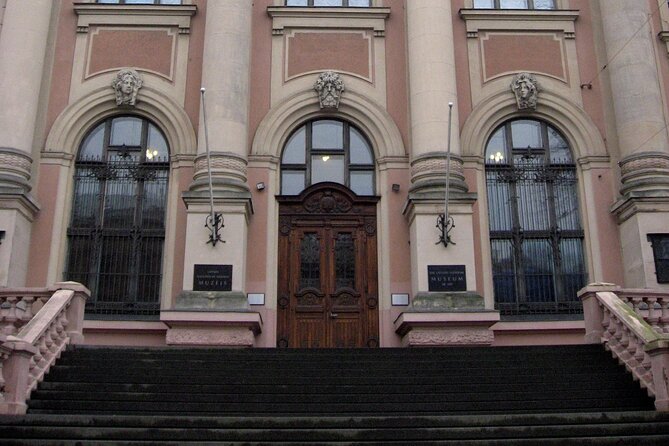
The tour begins at the Latvian National Museum of Art on Jaņa Rozentāla laukums. This is a practical starting point because the museum is a clear city-center landmark and the nearby streets lead directly toward Riga’s famous Art Nouveau district.
You do not need to buy a museum ticket for the walk. Museum admission and any other entrance fees are not included, so plan this as an outdoor experience unless you separately decide to visit an attraction along the way.
The opening section sets up the story and gives you a way to read the buildings ahead. That preparation matters. Without it, Art Nouveau can become a parade of elaborate windows, faces, flowers, and curved lines. With a little context, you can compare buildings and notice how architects used decoration for different purposes.
The start is also useful if you have limited time in Riga. You can reach the first point by public transportation, and the walk itself does not require a vehicle. Since the tour is self-guided, you can begin when it suits your schedule rather than waiting for a group.
Elizabetes 10b and the first lesson in decoration
The route makes a brief stop at Elizabetes 10b. This address is one of the places where the tour begins showing you the visual drama of Riga’s Art Nouveau district.
The commentary focuses on how to recognize the style, so this stop works as a practical exercise. Look up at the facade while listening, then test the description against the building in front of you. You may find that the audio helps turn small details into part of a larger design rather than random ornament.
Because the walk is short, the stop is not designed as a long lecture. That is a strength for many people. One of the best features of the audio is its moderate amount of information. It gives you enough background to understand why a building matters without burying the street view under a pile of dates and technical terms.
Still, a self-guided format asks you to stay alert. You must pause the audio yourself, keep track of the route, and make sure you are standing in the right place before continuing. The app provides maps and geodata, but the experience works best when you are willing to manage your own pace.
Alberta 2a and the architects behind the facades
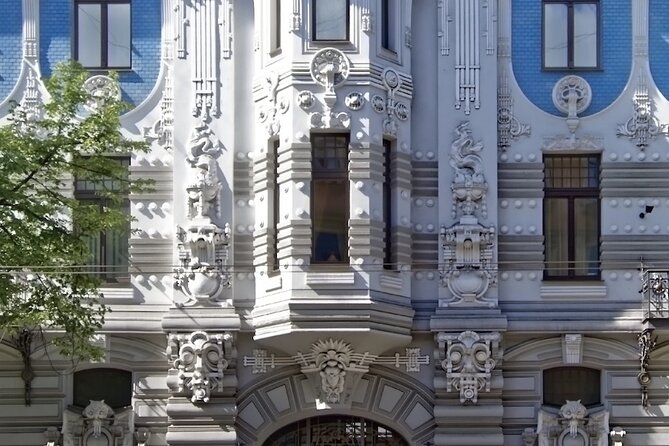
The next stop is Alberta 2a, bringing you onto Alberta Street, the heart of this walk. Here, the tour turns more directly toward the architects who shaped Riga’s reputation.
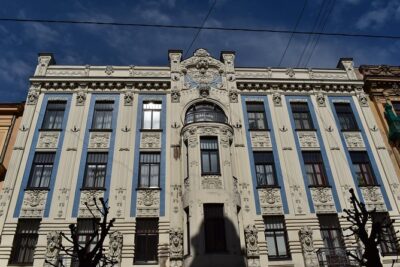
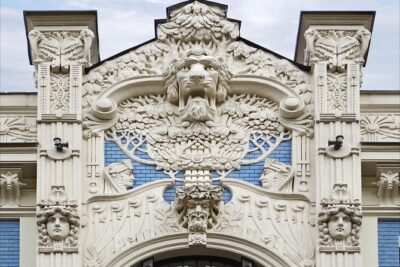
Mikhail Eisenstein receives special attention. His buildings are known for highly decorative treatment, and the tour uses his work to explain how bold Art Nouveau could become. The facades are not quiet background walls. They were designed to attract attention, frame windows, and give ordinary residential buildings a theatrical presence.
One especially interesting detail is Eisenstein’s family connection. His son, Sergei Eisenstein, later became a legendary Soviet filmmaker. That link adds a human thread to the architectural story. You begin with a father designing striking city buildings and end up with a son who helped shape film history.
The route does not require you to know anything about architecture beforehand. If you are already interested in design, you may want more detail than the audio provides. For most visitors, though, the concise explanation is useful because it keeps the focus on what you can actually see from the street.
More history and heritage tours:
- Riga Jewish History Tour
★ 5.0 · 9 reviews - Cesis: Medieval Heritage and Natural Treasures
★ 4.0 · 4 reviews - All Inclusive Honest History Tour – Āraiši, Cēsis, Līgatne, Sigulda
★ 5.0 · 3 reviews
Alberta 4 and Riga’s residential character
At Alberta 4, the tour continues through one of Riga’s most concentrated groups of Art Nouveau buildings. The important point here is that these were not built only as monuments. Many were residential buildings, created for daily city life.
That distinction helps you read the street differently. Decorative architecture was part of the setting where people lived, worked, entered their homes, and met neighbors. Ornate facades could make a building feel prestigious, modern, or culturally important, even when the structure served an ordinary urban purpose.
The audio also helps explain why Riga is especially rewarding for an architecture walk. You do not need to cross the city to find examples. Several important addresses sit close together, so a short route can show you several approaches to Art Nouveau in one compact area.
The possible weakness is that the route moves quickly. Thirty to 45 minutes is enough for an introduction, but not enough to examine every carving or compare every nearby building. If a particular facade catches your eye, pause the tour and take your time. The self-guided format gives you that option, even if it means finishing later than the estimate.
Alberta 11 and the move toward National Romanticism
The stop at Alberta 11 adds another layer to the walk. Riga’s architects did not simply copy one international style forever. They developed a local direction known as National Romanticism.
This is one of the most valuable parts of the route because it places the buildings within Latvian culture. You learn that architecture can borrow ideas from abroad while still developing a regional voice. The change may be visible in the way buildings use materials, shapes, textures, and references to local traditions.
The tour’s focus on National Romanticism keeps the experience from becoming a narrow lesson about ornament. It shows that architecture also reflects questions of identity. Riga was part of a changing northern European world, and its buildings reveal that tension between international fashion and local expression.
You should listen carefully at this point, especially if you are more interested in the story than in taking facade photographs. The visual difference may not be immediately obvious to everyone, and the narration provides the needed guide. A live guide could point out the details in person, but the audio still gives you a workable framework.
Alberta 13 and the pleasure of looking upward
At Alberta 13, the route remains in the district’s architectural center. This is a good point to slow down and use the lesson from the earlier stops.
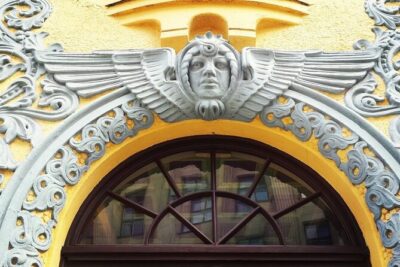
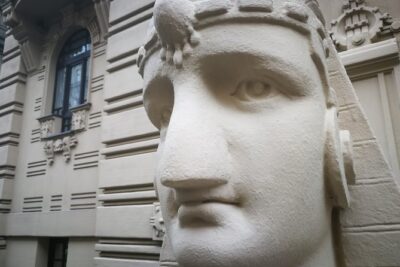
Riga rewards upward-looking sightseeing. Doorways, upper floors, rooflines, and sculptural faces can carry as much visual information as the ground-level entrances. The audio encourages you to examine the facades rather than merely pass them on the way to the next address.
I like that the route connects individual buildings to a wider story. You are not told only that one address is attractive. You are given reasons to compare it with the other examples around you. That makes the walk more active and gives you a useful skill for the rest of your time in Riga.
The app also includes access to other self-guided tours after you download it. That adds value if you enjoy exploring cities independently. The extra tours are not described in detail here, so you should treat them as an added feature rather than a reason to assume a particular subject or route will suit you.
Ending at Alberta 12 and one final architectural view
The walk ends at Alberta 12. This keeps the finish in the same compact district rather than sending you far from the main architectural sights.
Ending here is convenient if you want to continue exploring Alberta Street on foot. The tour does not include transportation, food, drinks, museum admission, or other attraction tickets, but none of those are needed to complete the route. You can simply finish the audio and keep walking through the area at your own expense and pace.
The final stop also gives the route a natural shape. You begin with the museum and a general introduction, move through a series of important addresses, and finish with the major themes in place: how to identify Art Nouveau, how Mikhail Eisenstein used decoration, how residential architecture shaped the district, and how National Romanticism gave Riga a local character.
What the audio format does well
The strongest feature is control. You decide when to start, how long to look at each building, and whether to pause for photographs. You do not have to keep up with a group or fit your visit around a guide’s departure time.
The app provides lifetime access in English, along with offline audio, maps, and geodata. Downloading the material before setting out is a sensible step. Offline access is especially useful if your phone connection is unreliable or you want to avoid using mobile data.
The audio also appears designed for a broad audience. It explains the subject without assuming a background in architecture, history, or Latvian culture. The voice has been praised for being clear, friendly, and engaging, with a strong interest in history and politics. That tone matters in a short tour because dry narration can make even beautiful buildings feel like homework.
You should remember that this is not the same as a live walking tour. Nobody will adjust the route for weather, answer a question, or point to a detail you missed. If you prefer conversation and personal recommendations, this format may feel limited. If you value independence and a low price, it is a strong fit.
Is $5.20 good value for Riga?
At $5.20 per person, the price is modest for a focused city walk. You receive lifetime access to the English audio, maps, and location data, rather than a one-time recording that disappears after your visit.
The value is highest if you are short on time or do not have access to a live walking tour. A 30 to 45 minute route can fit between museum visits, meals, or other plans. It also gives you a better starting point than wandering the district without context.
The price does not include a smartphone or headphones, so you need to bring both. You also need to handle the app yourself. Those are small requirements, but they matter if your phone battery is low or you prefer not to listen through headphones in the street.
The booking is nonrefundable and cannot be changed for any reason. Since the experience is often booked around five days ahead, check your Riga schedule before purchasing. The stated operating period lists the tour as available Monday through Sunday, around the clock, from July 10, 2020 through June 18, 2026.
Who should choose this walk?
I would recommend it to you if you want a short introduction to Riga’s Art Nouveau district, especially if you prefer to explore without a group. It suits independent visitors, architecture fans, first-time Riga visitors, and anyone working with a tight schedule.
It is also a good choice if you like learning just enough to make your sightseeing more meaningful. The commentary offers a clear entry point into Art Nouveau, Eisenstein’s work, and National Romanticism without requiring a full morning.
You may want something else if you need a guide beside you, want to enter buildings, or prefer a longer architectural study. No attraction tickets are included, and the route is entirely self-guided. You should also skip it if you are uncertain about your schedule, since the purchase cannot be refunded or amended.
FAQ
Where does the Riga Art Nouveau audio tour start?
It starts at the Latvian National Museum of Art, at Jaņa Rozentāla laukums 1 in Riga.
Where does the tour end?
The tour ends at Alberta iela 12 in Riga.
How long does the audio tour take?
The estimated duration is about 30 to 45 minutes.
How much does the tour cost?
The listed price is $5.20 per person.
Which buildings are included on the route?
The route includes brief stops at Elizabetes 10b, Alberta 2a, Alberta 4, Alberta 11, and Alberta 13. It ends at Alberta 12.
Is a museum ticket included?
No. Tickets and entrance fees for museums or other attractions are not included.
Do I need my own phone and headphones?
Yes. A smartphone and headphones are not provided. The tour uses the VoiceMap app for Android and iOS.
Can I use the tour without mobile data?
Yes. Offline access is provided for the audio, maps, and geodata.
Should you book it?
Book this tour if you want an inexpensive, focused way to understand Riga’s most famous Art Nouveau streets. The short route, offline access, and flexible start time make it practical, while the discussion of Mikhail Eisenstein and National Romanticism gives the buildings real context.
Skip it if you want a personal guide, extensive architectural detail, or interior visits. For everyone else, $5.20 buys a useful introduction to a remarkable part of Riga, with enough freedom to stop, look up, and enjoy the city at your own pace.
More Self-Guided Tours
- Riga: Evening or Sunset Boat Tour with Drink and Audio Guide
★ 4.0 · 10 reviews - Riga Canal and Daugava Boat Tour with Welcome Drink & Audio Guide
★ 4.5 · 9 reviews
Recently added around Riga
- Tour from Riga to Vilnius: Bauska Castle, Rundale Palace and The Hill of Crosses★ 5.0 · 3 reviews
- Group Tour: Sigulda and Turaida from Riga.★ 4.5 · 3 reviews
- Fun Walk Private Tour Around Central Market Riga★ 4.5 · 3 reviews
- Hiking Adventure in Gauja National Park – 7 Days★ 5.0 · 3 reviews
- Latvia’s Switzerland and Gauja National Park Tour★ 5.0 · 3 reviews
- Jurmala sunset tour★ 4.5 · 3 reviews
- Riga Medieval Dinner★ 4.0 · 4 reviews
- Private Snowmobile or ATV Safari with Riga Black Balsam Tasting★ 5.0 · 4 reviews
Art Nouveau Tours, compared.
Ultimate Art Nouveau Experience in Riga – Private Tour
Read our review →Browse the lists this tour appears in